

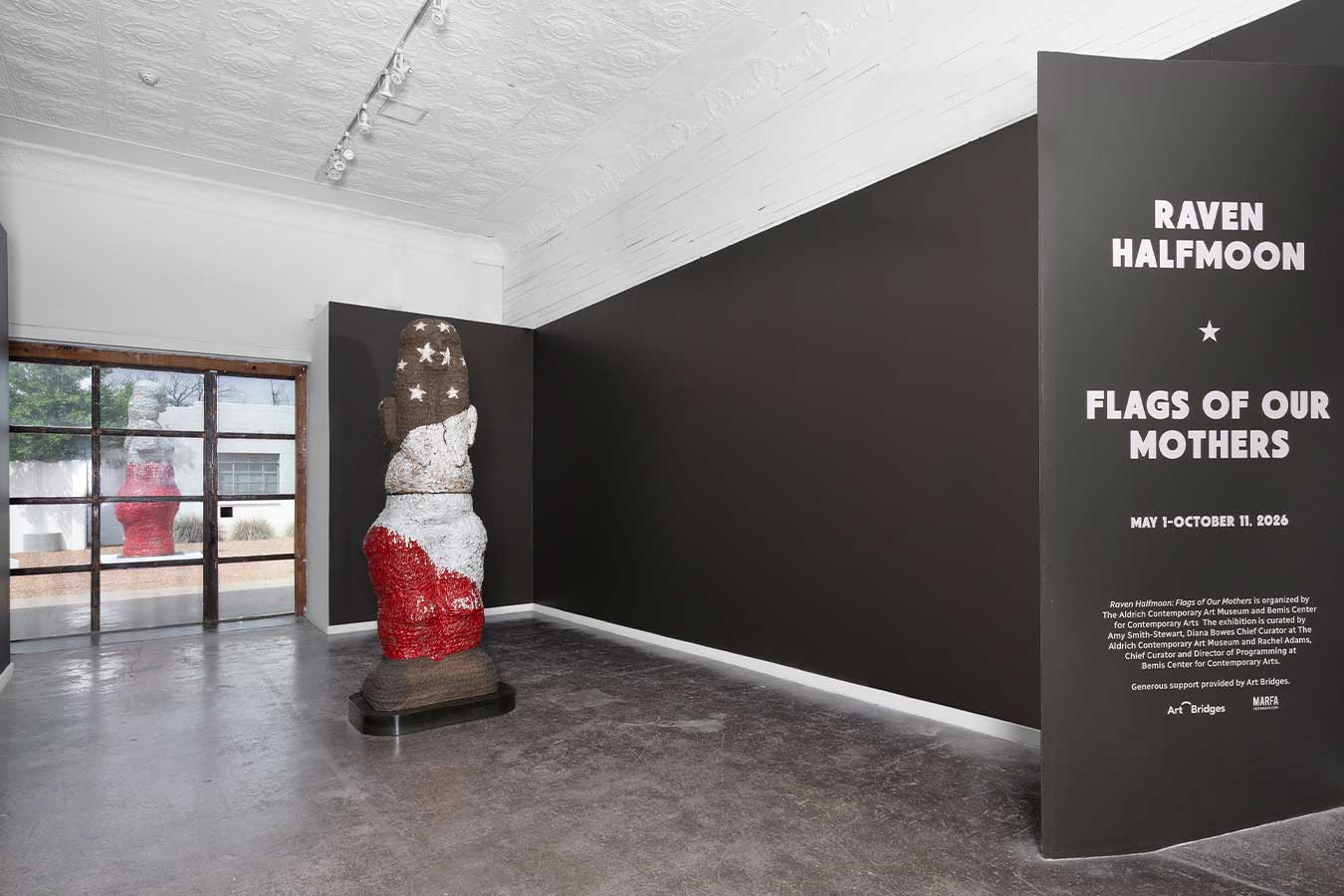
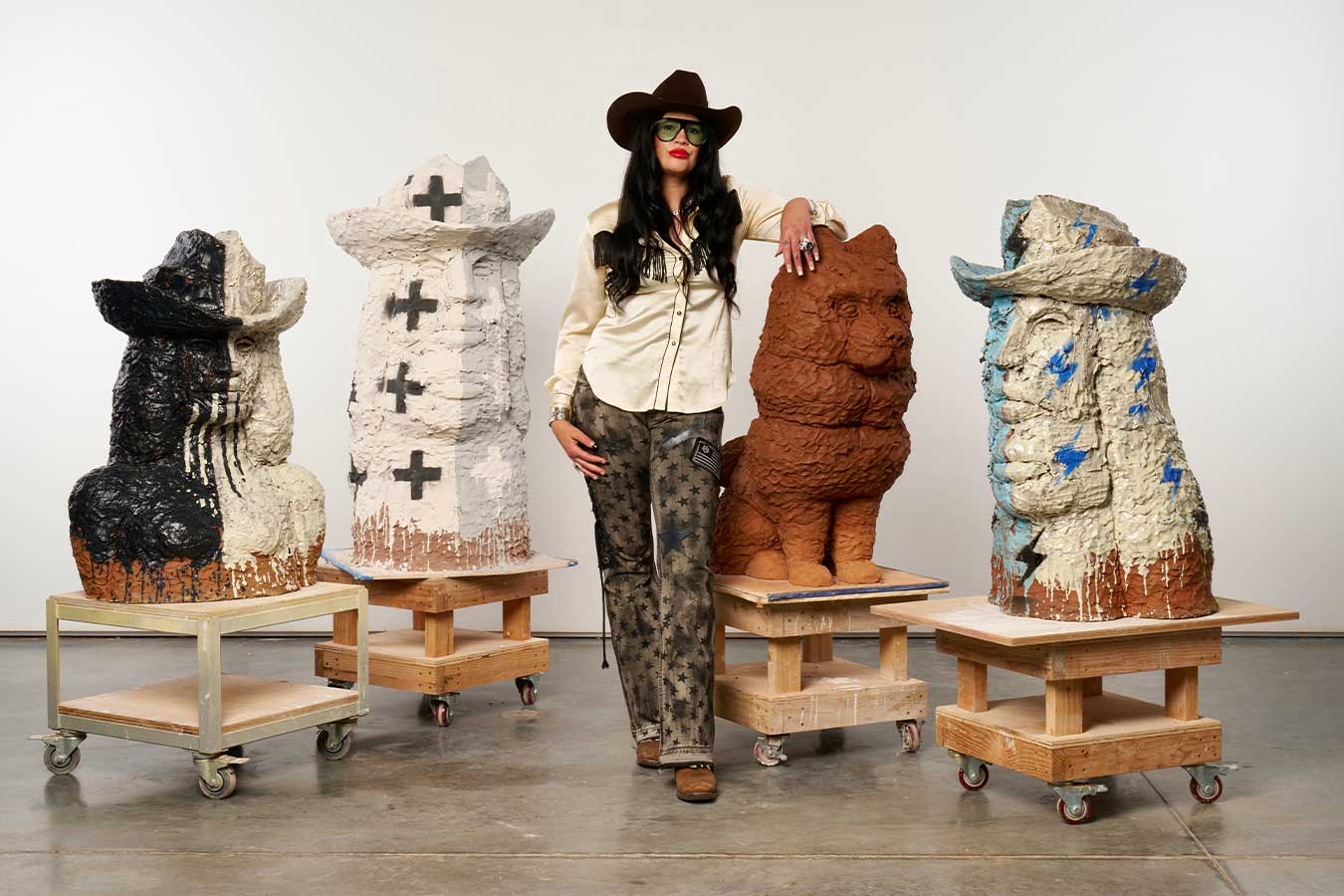
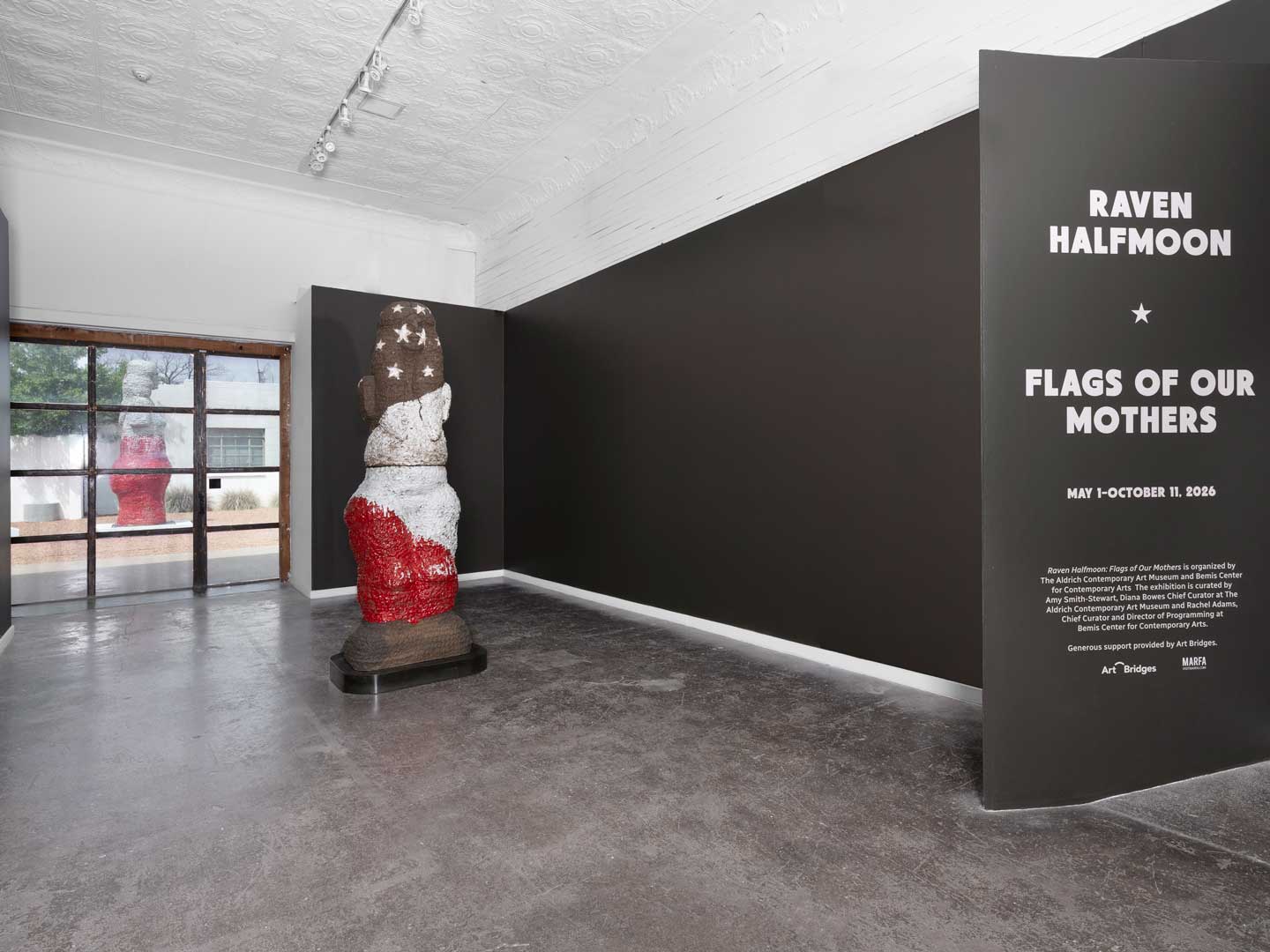
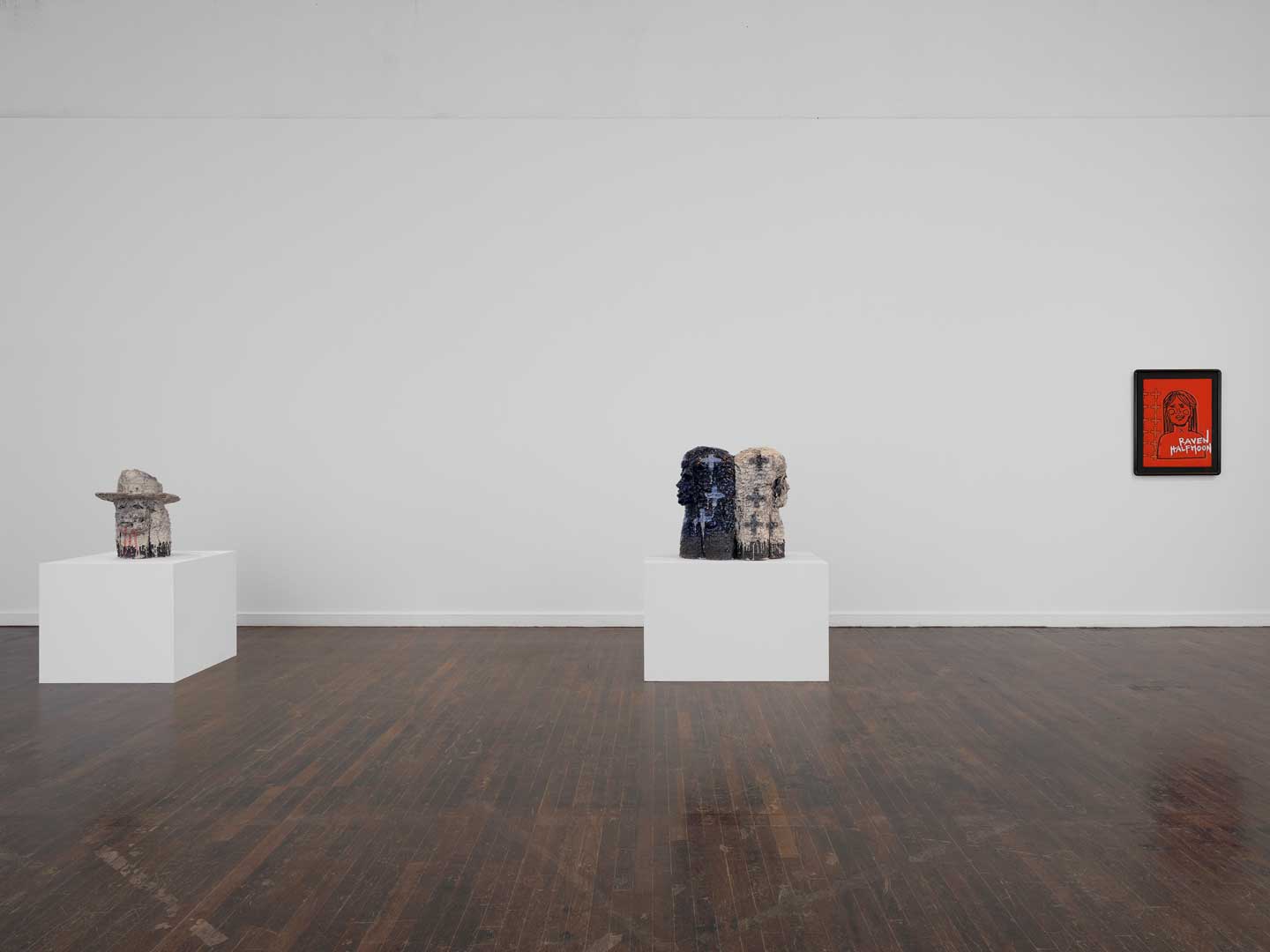
Ballroom Marfa is proud to present Raven Halfmoon: Flags of Our Mothers, the first major traveling exhibition for the artist, featuring new and recent works made over the last five years. The exhibition opens May 1, 2026 and continues through October 11, 2026.
For this iteration, Ballroom Marfa has commissioned the artist to develop site-responsive additions to the exhibition that will offer a fresh perspective on Halfmoon’s exploration of memory, ancestry, and form. The title of the exhibition, Flags of Our Mothers, is a tribute to the matriarchs in her life and all the Indigenous women, who over many centuries, have created and endured, keeping their stories and traditions present, active, and alive.
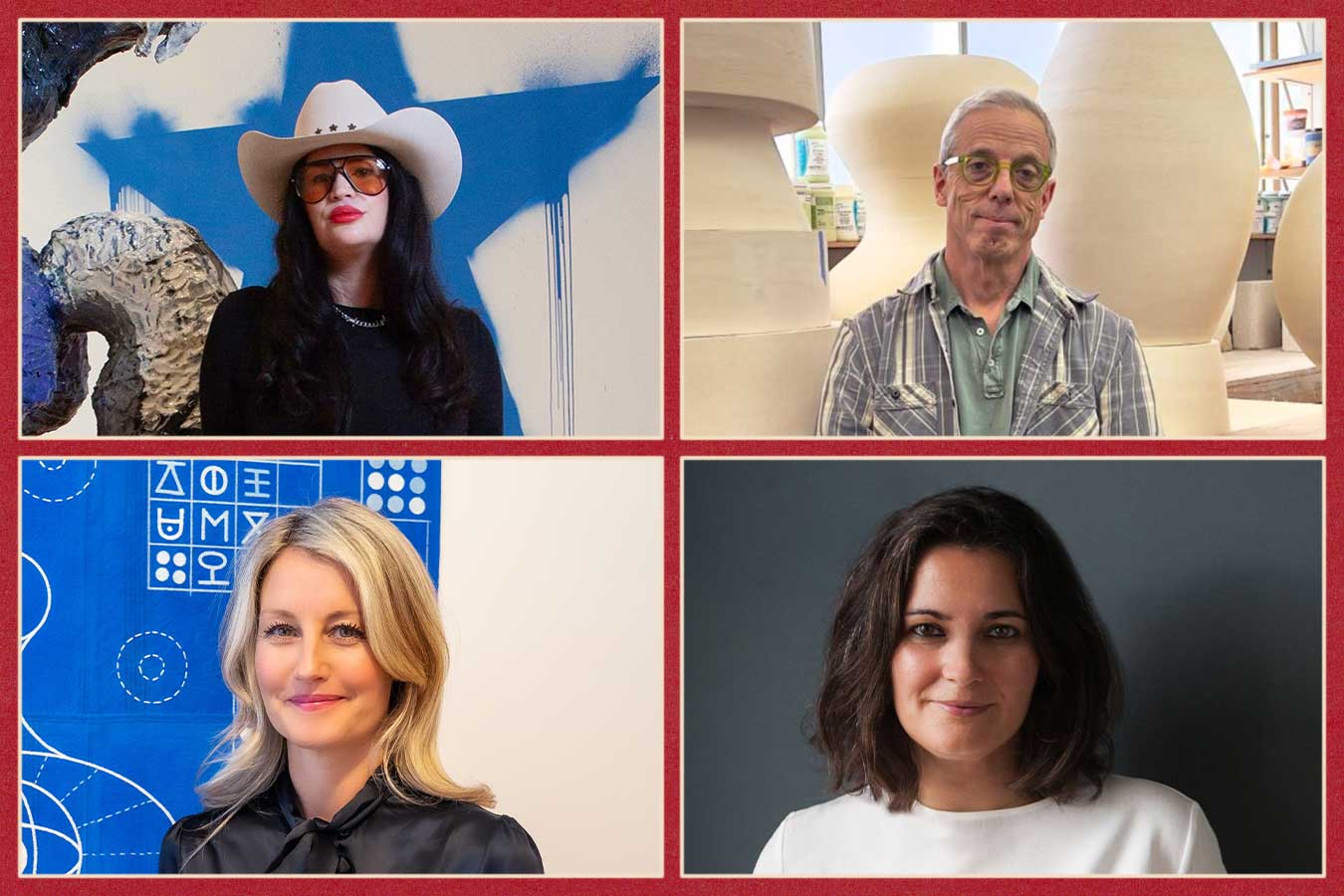
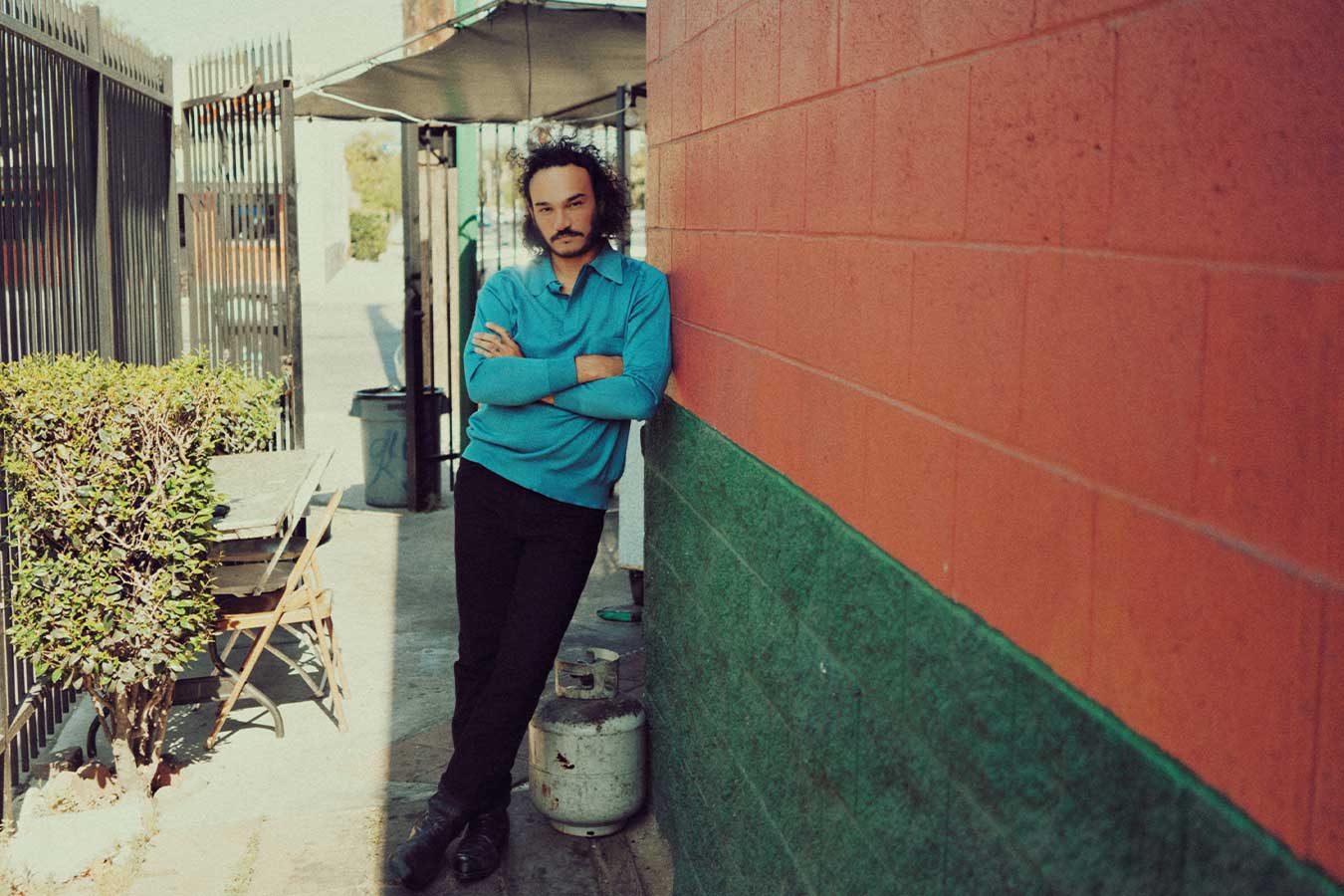
Opening weekend, May 1–2, 2026, will feature a series of celebratory programs, including an artist talk with Halfmoon and her long-time collaborator, sculptor Tony Marsh, joined by the exhibition’s original curators, Amy Smith-Stewart, and Rachel Adams. Guests will also have the opportunity to experience a community meal by Cherokee Chef Nico Albert of Burning Cedar Sovereign, along with live music by Night Beats, culminating in an immersive weekend that merges art, food, and ceremony in the high desert.
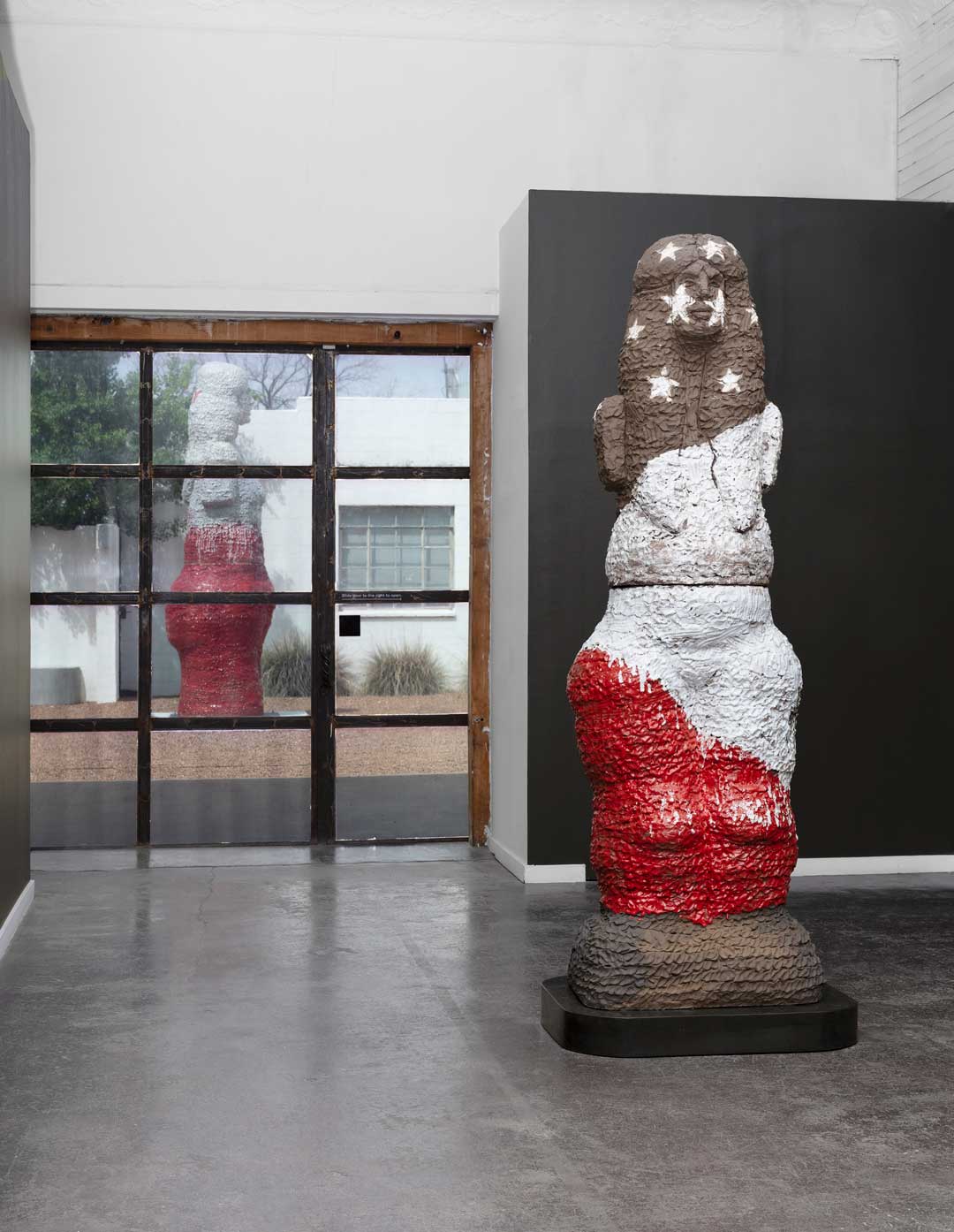
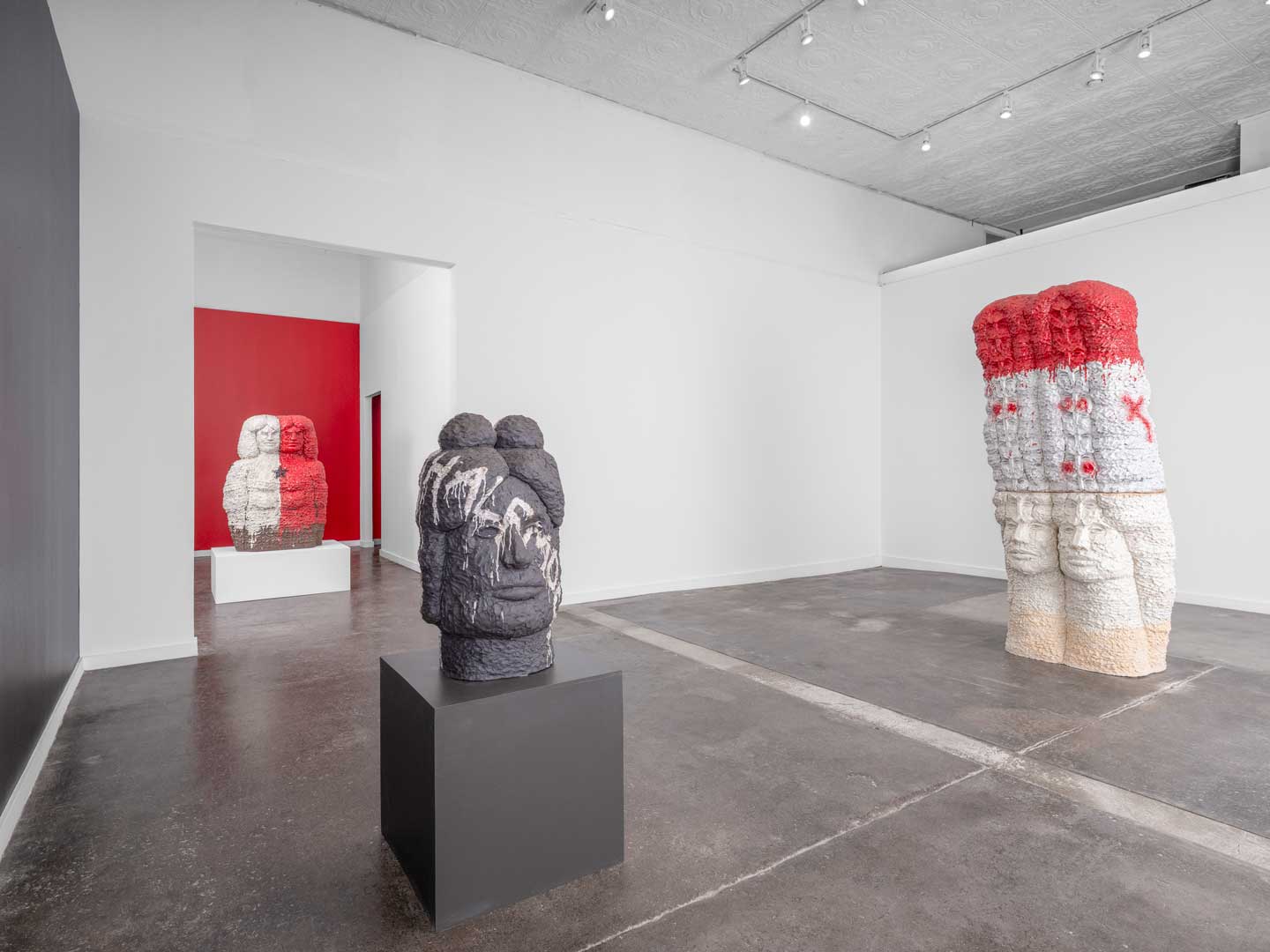
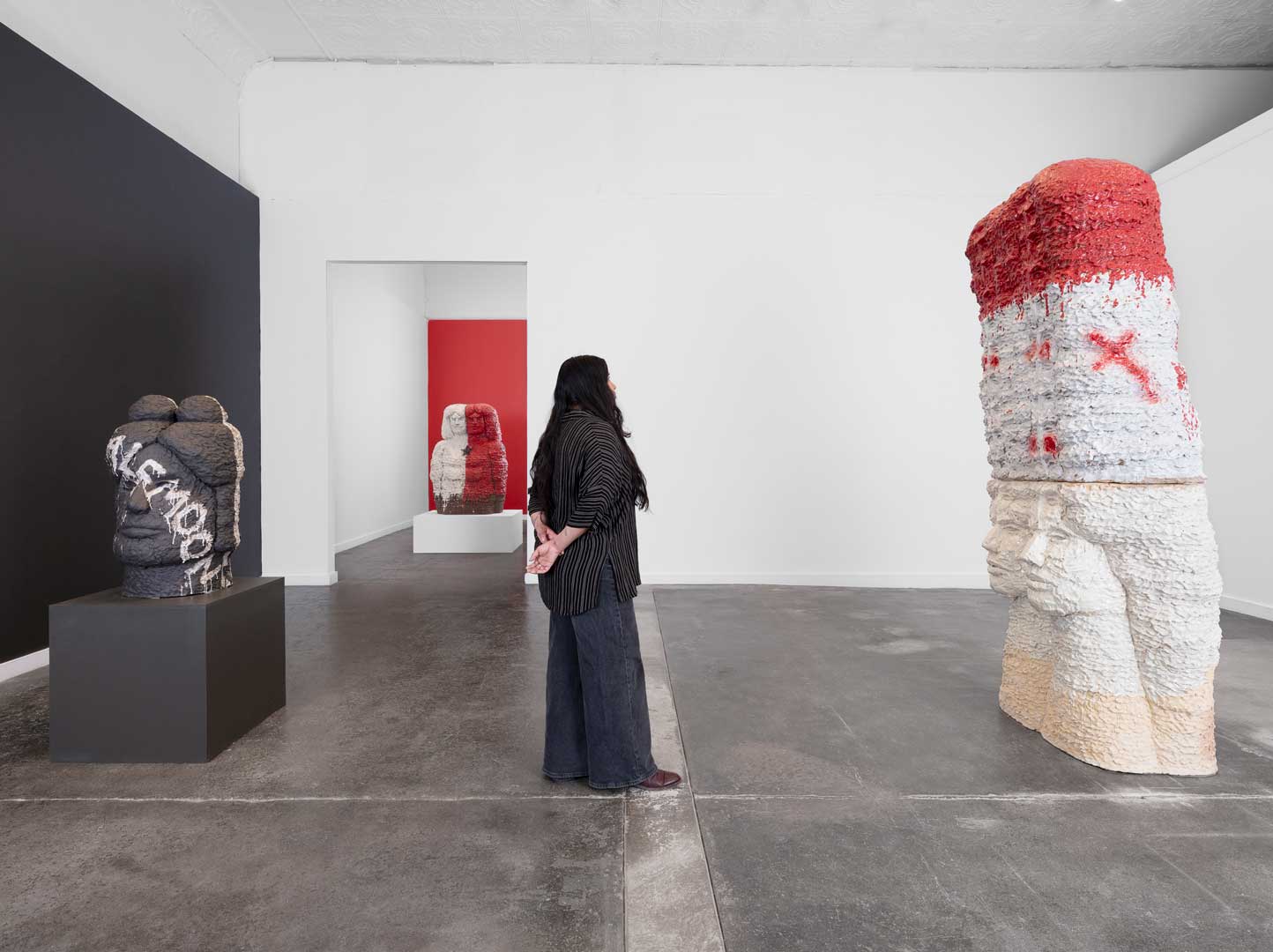
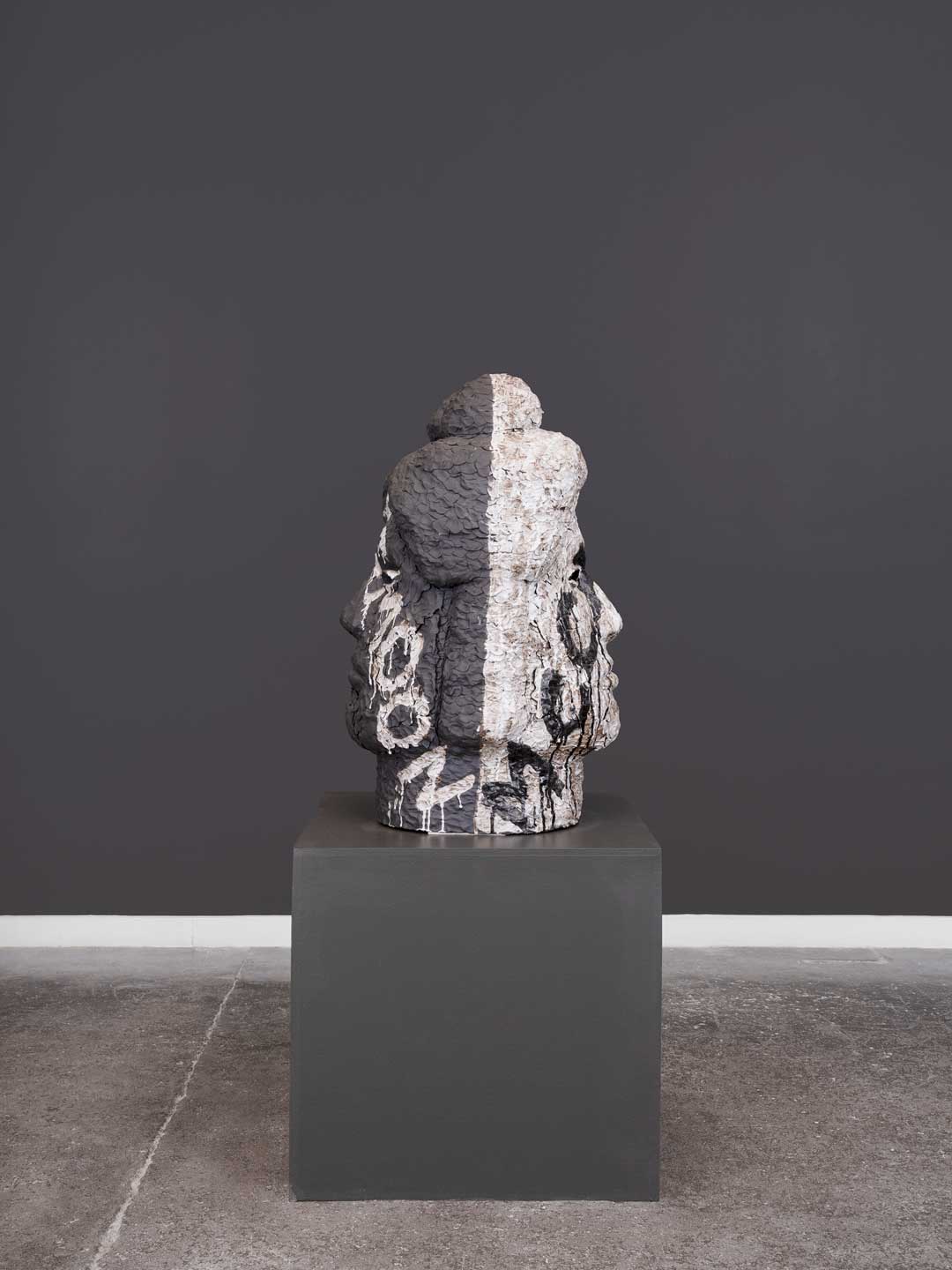
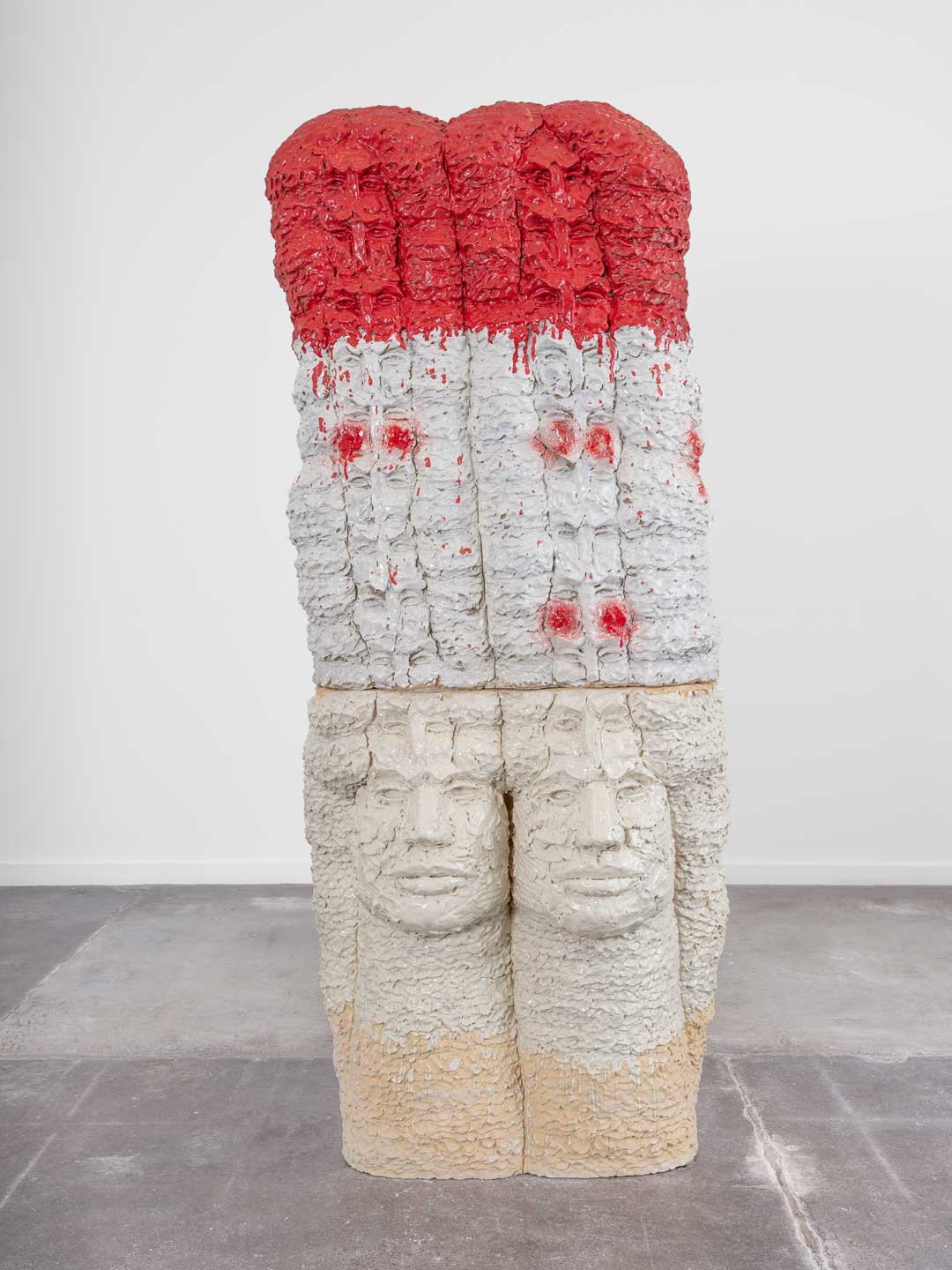
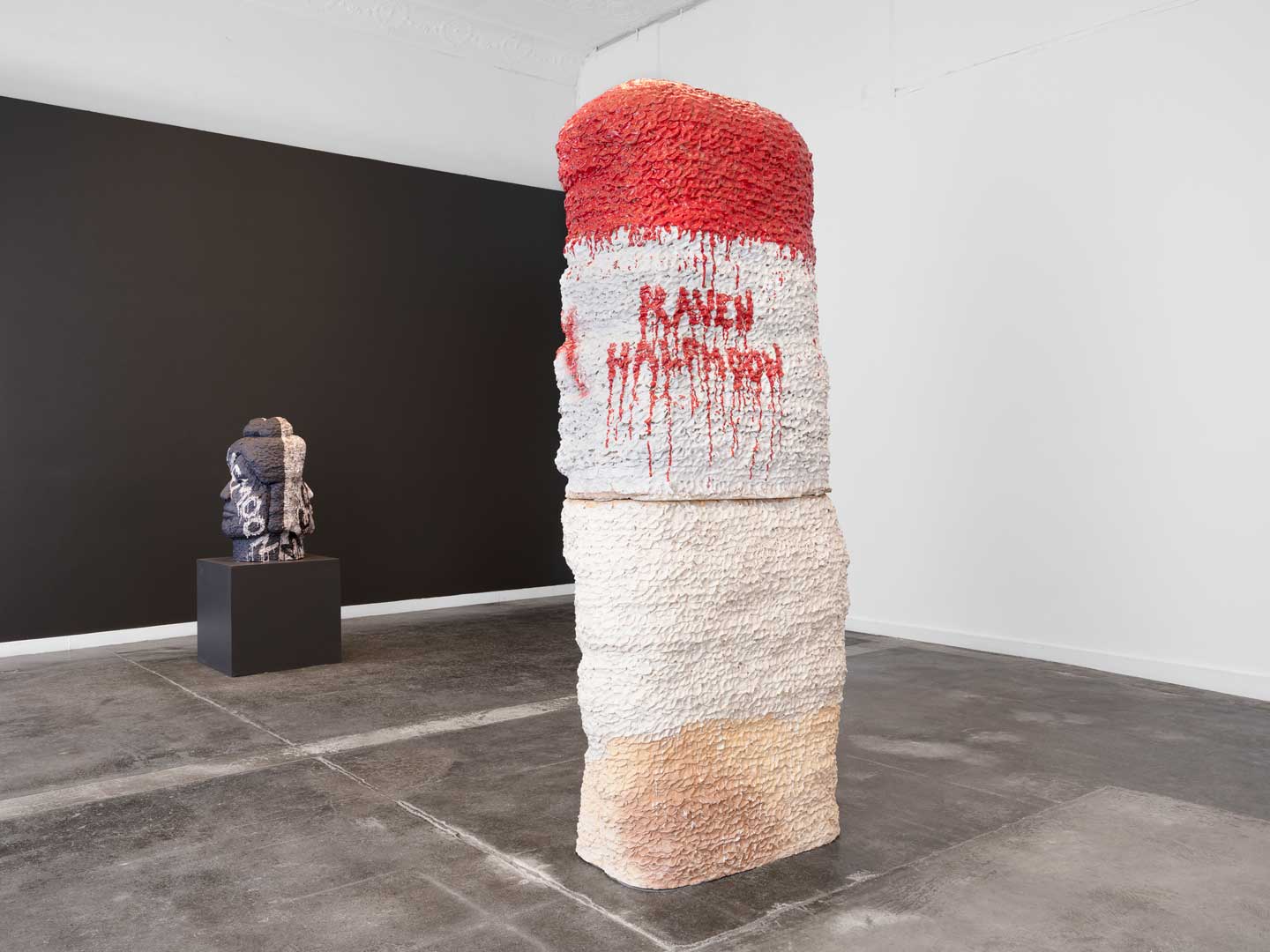
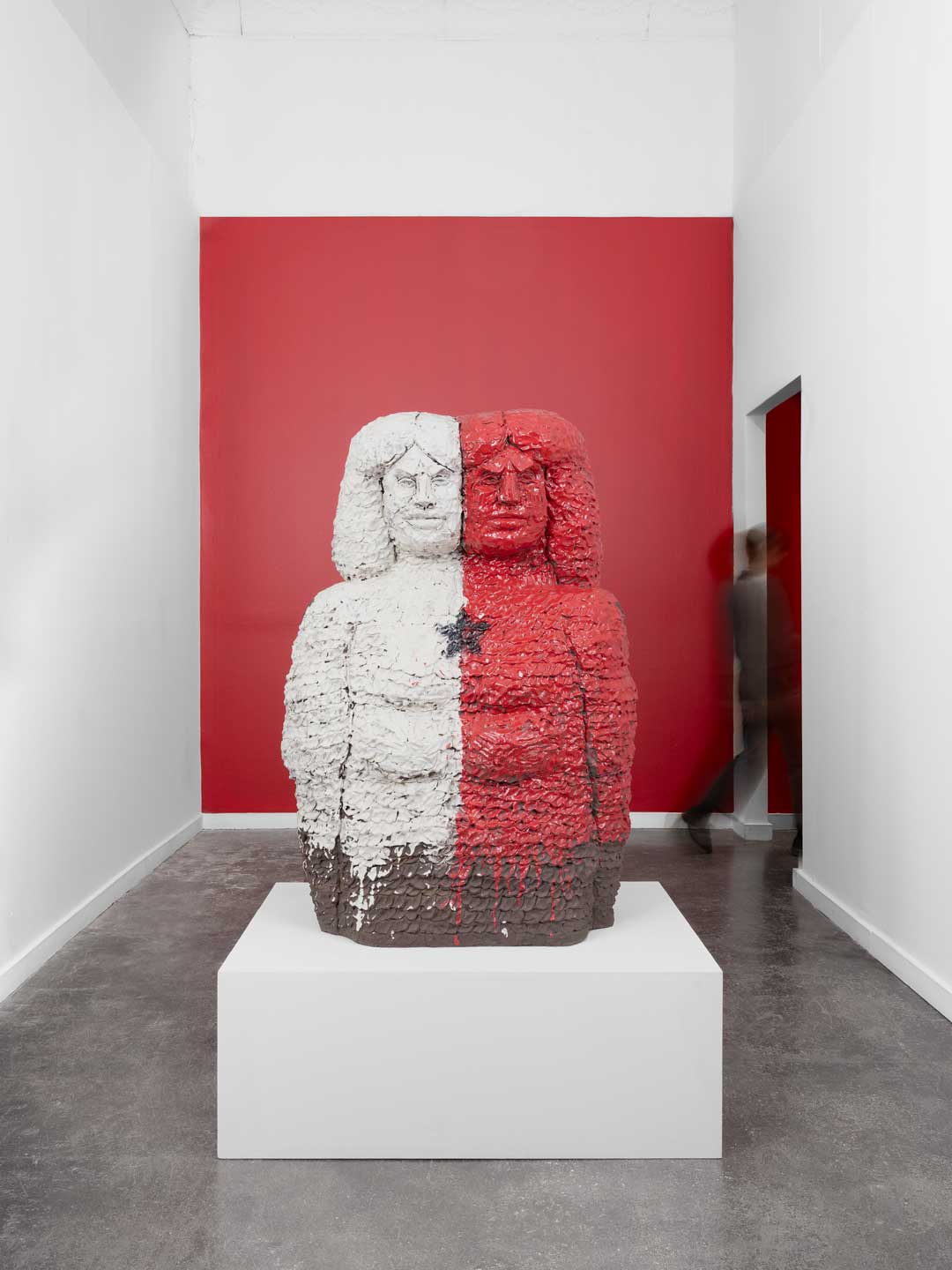
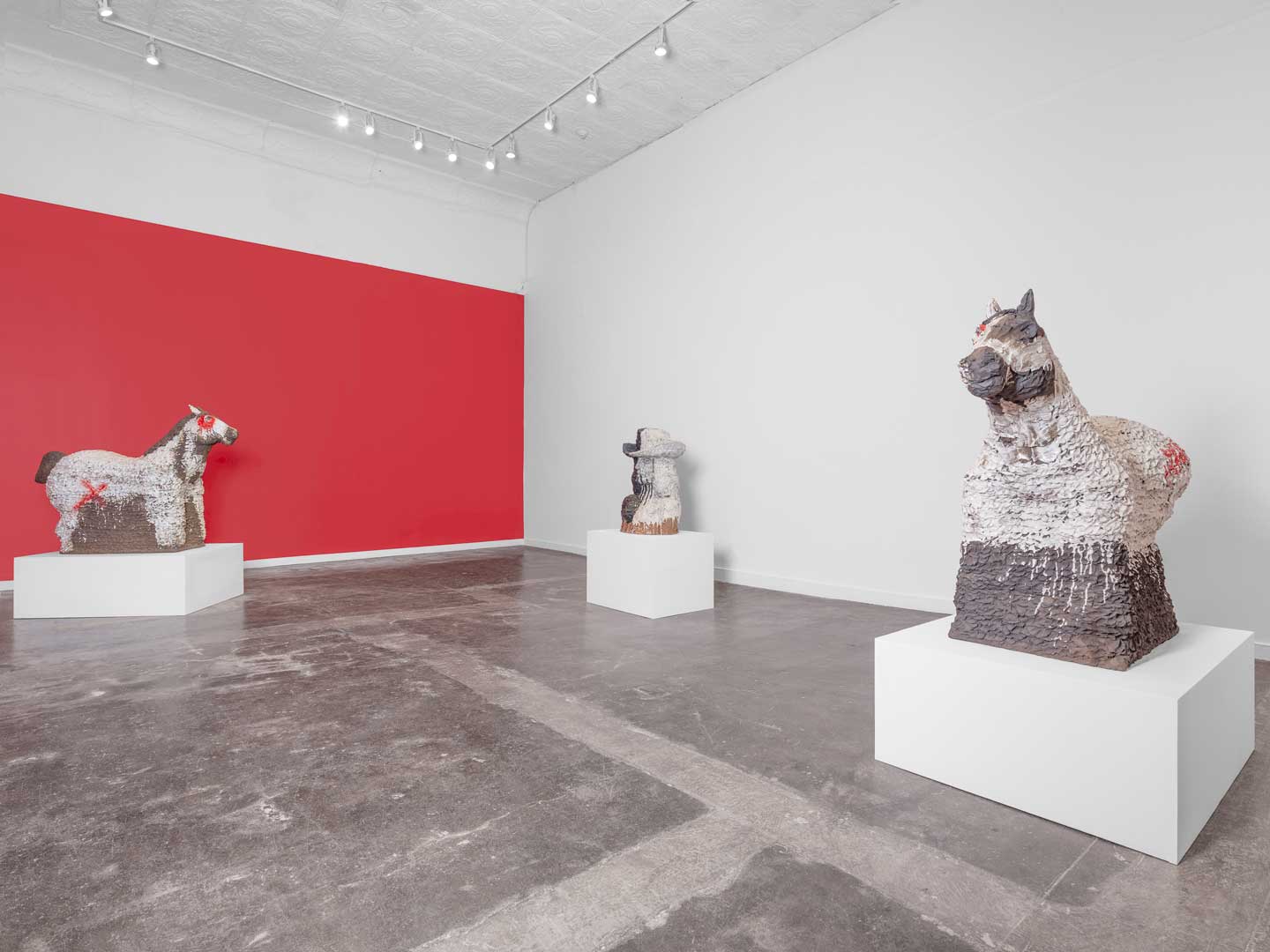
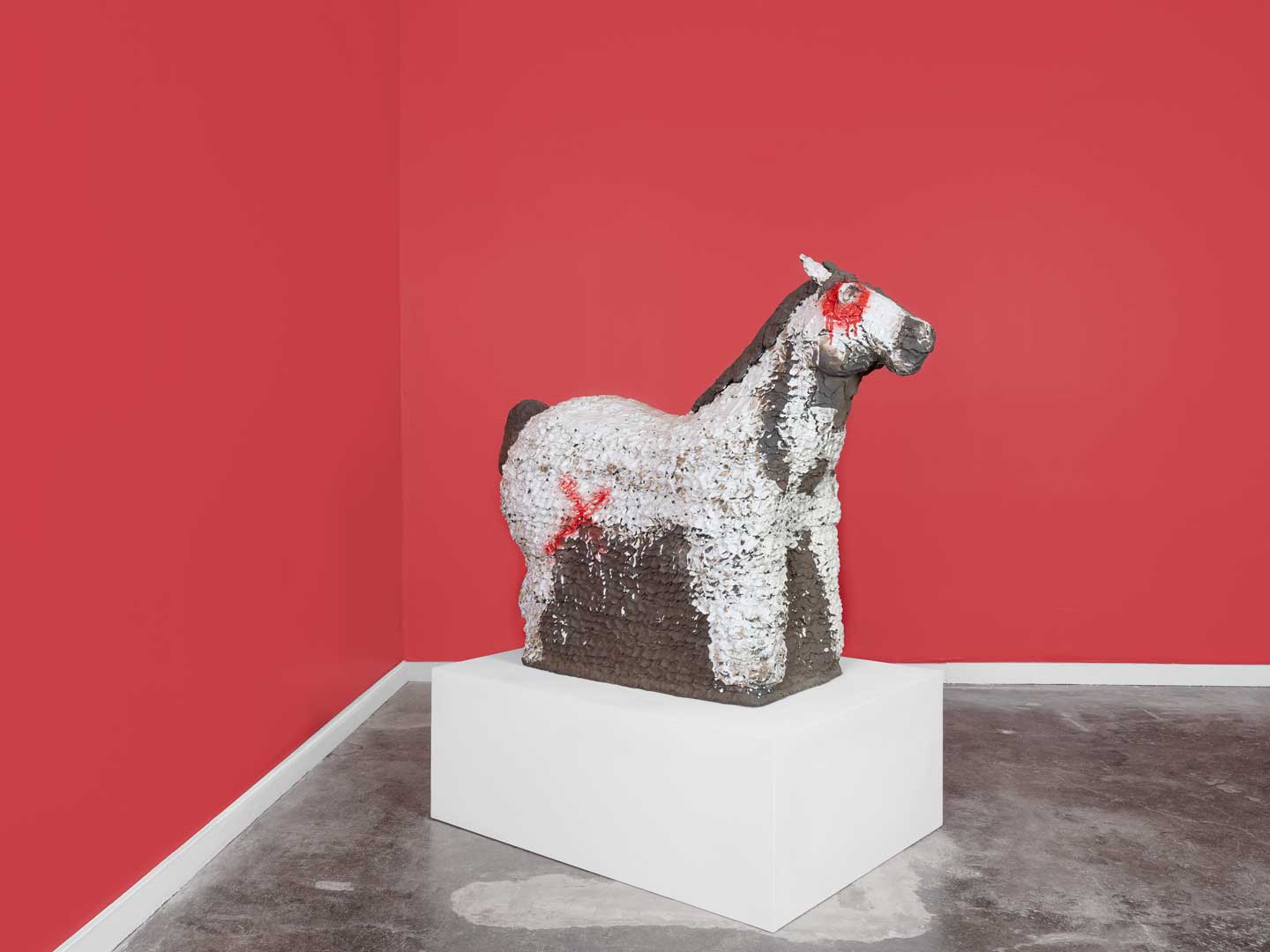
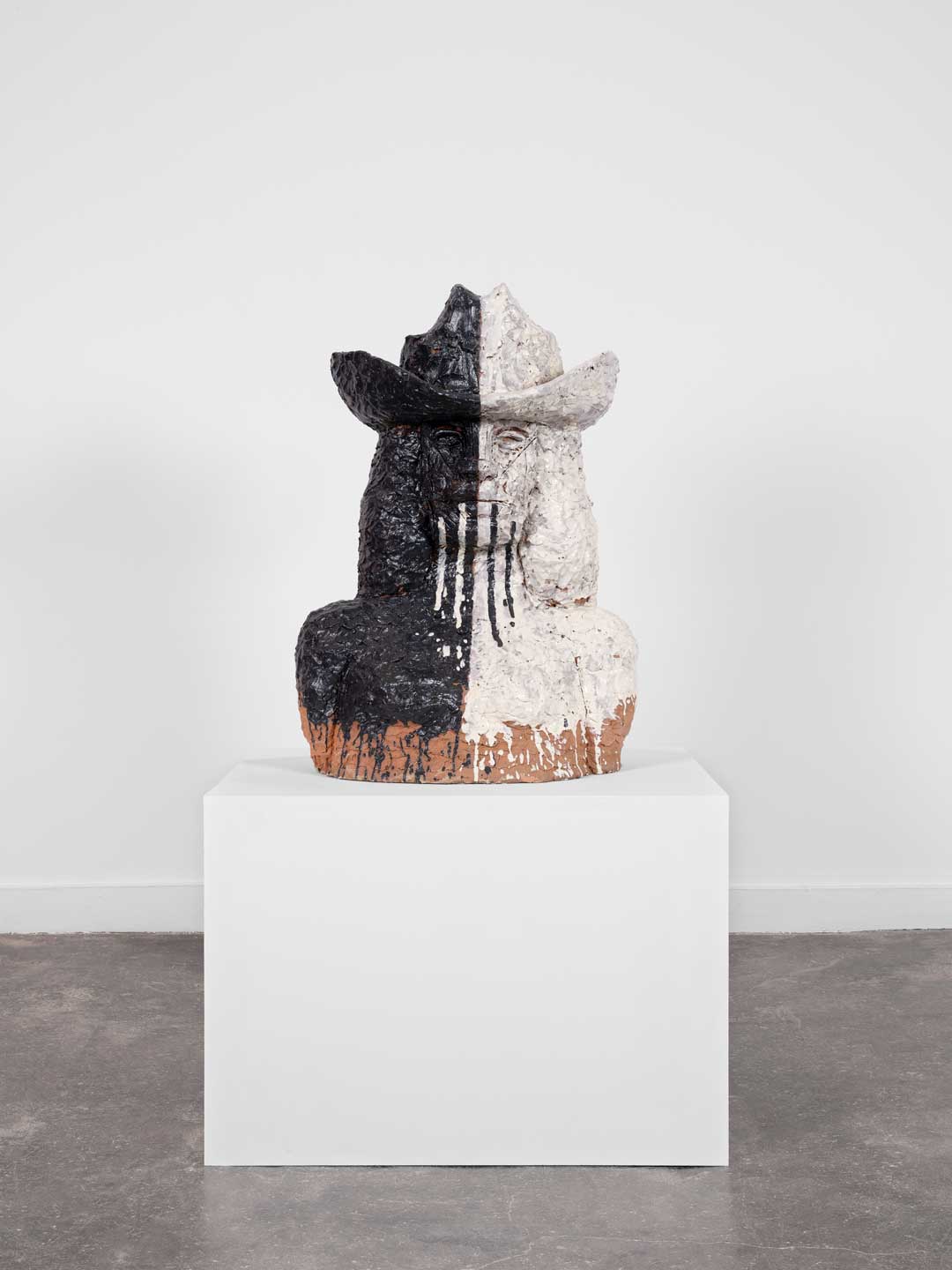
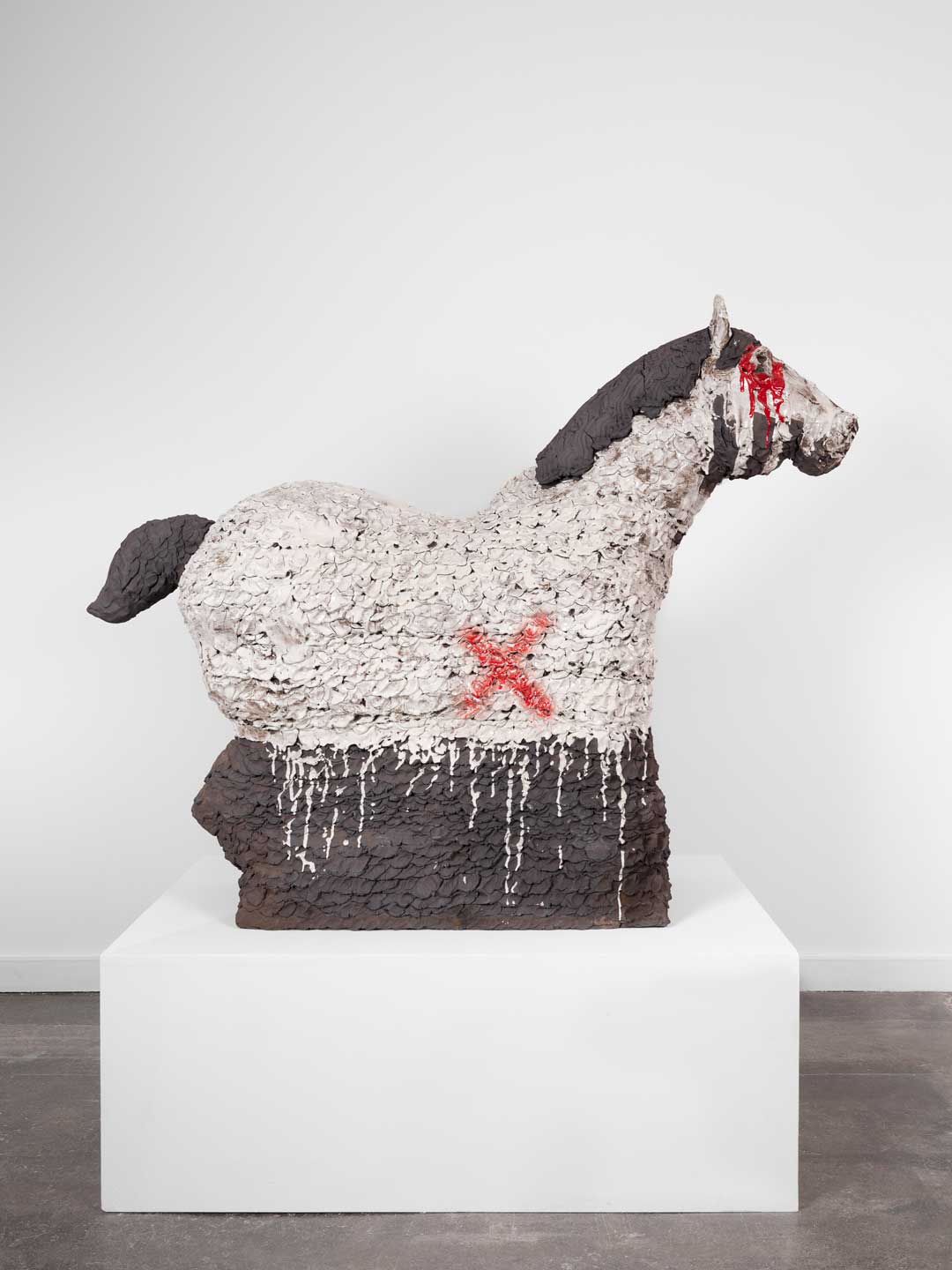
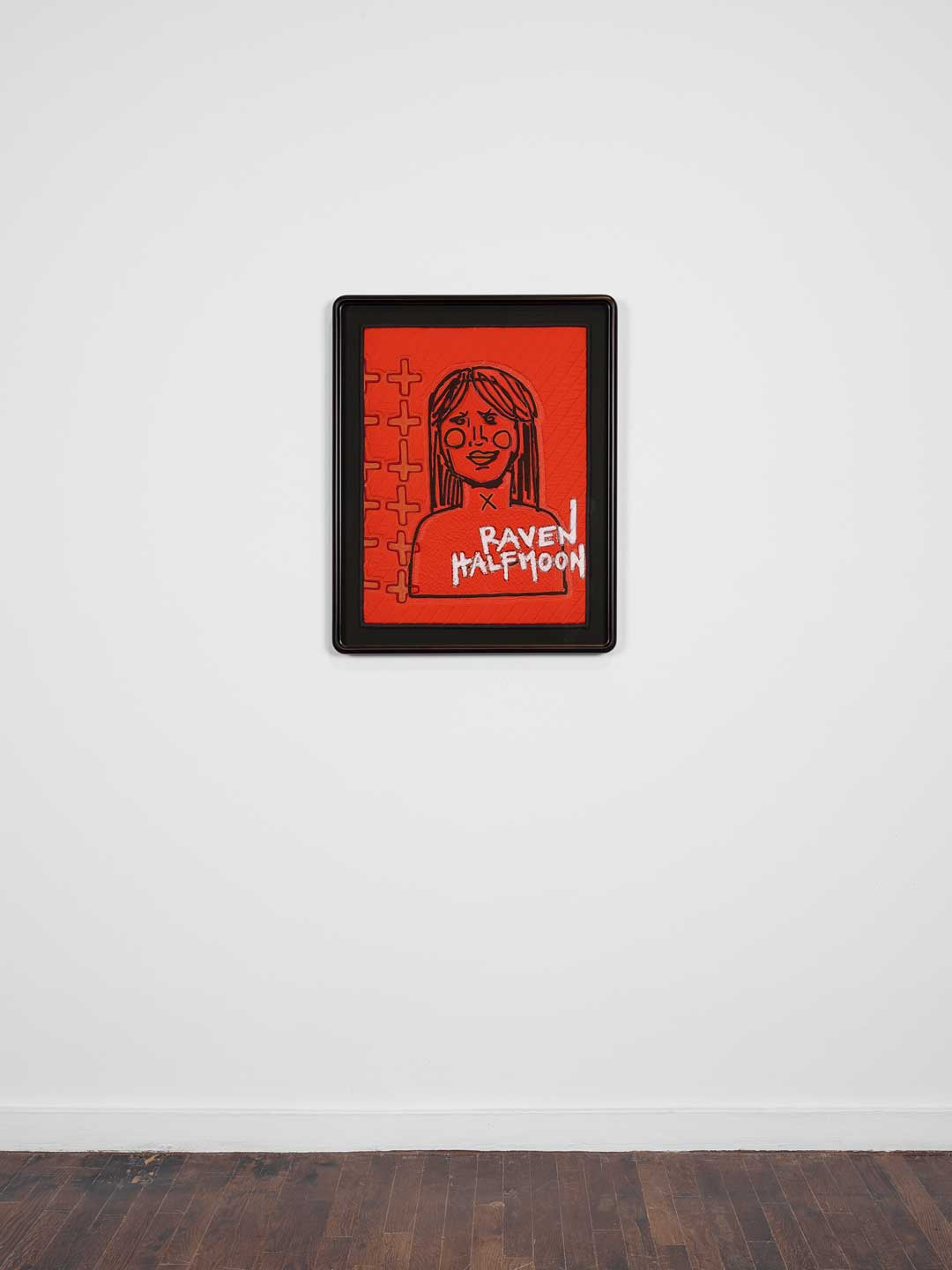
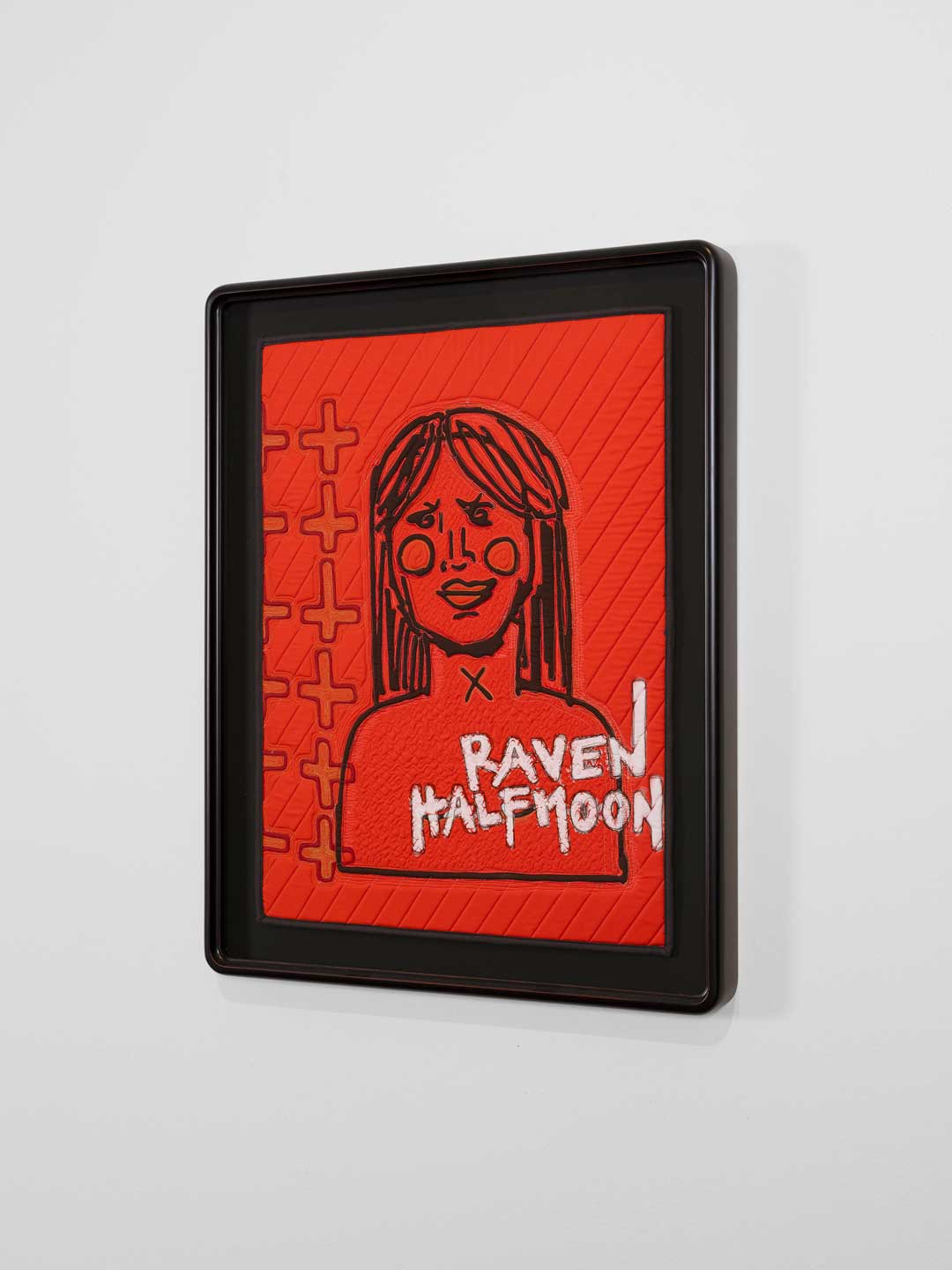
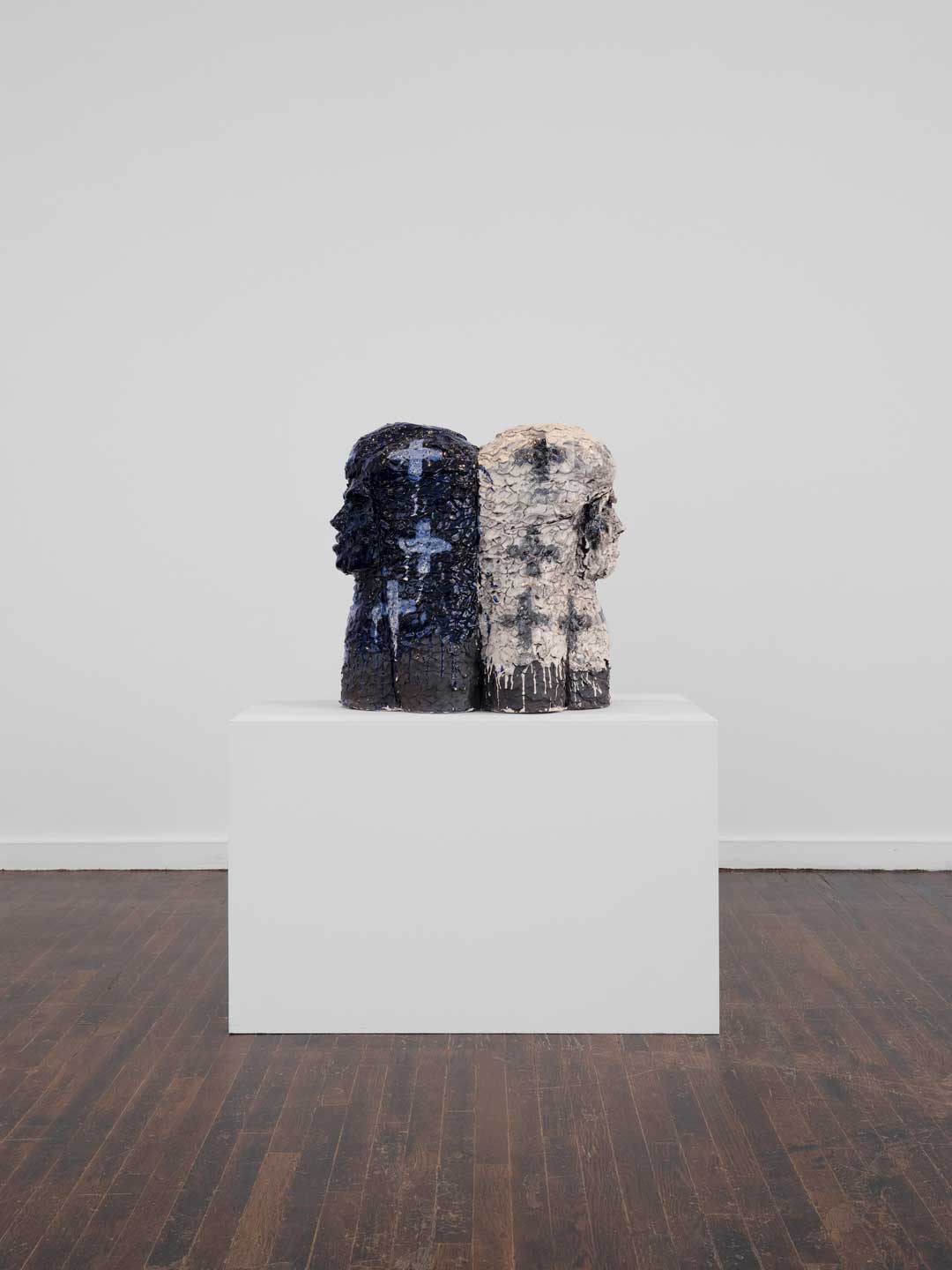
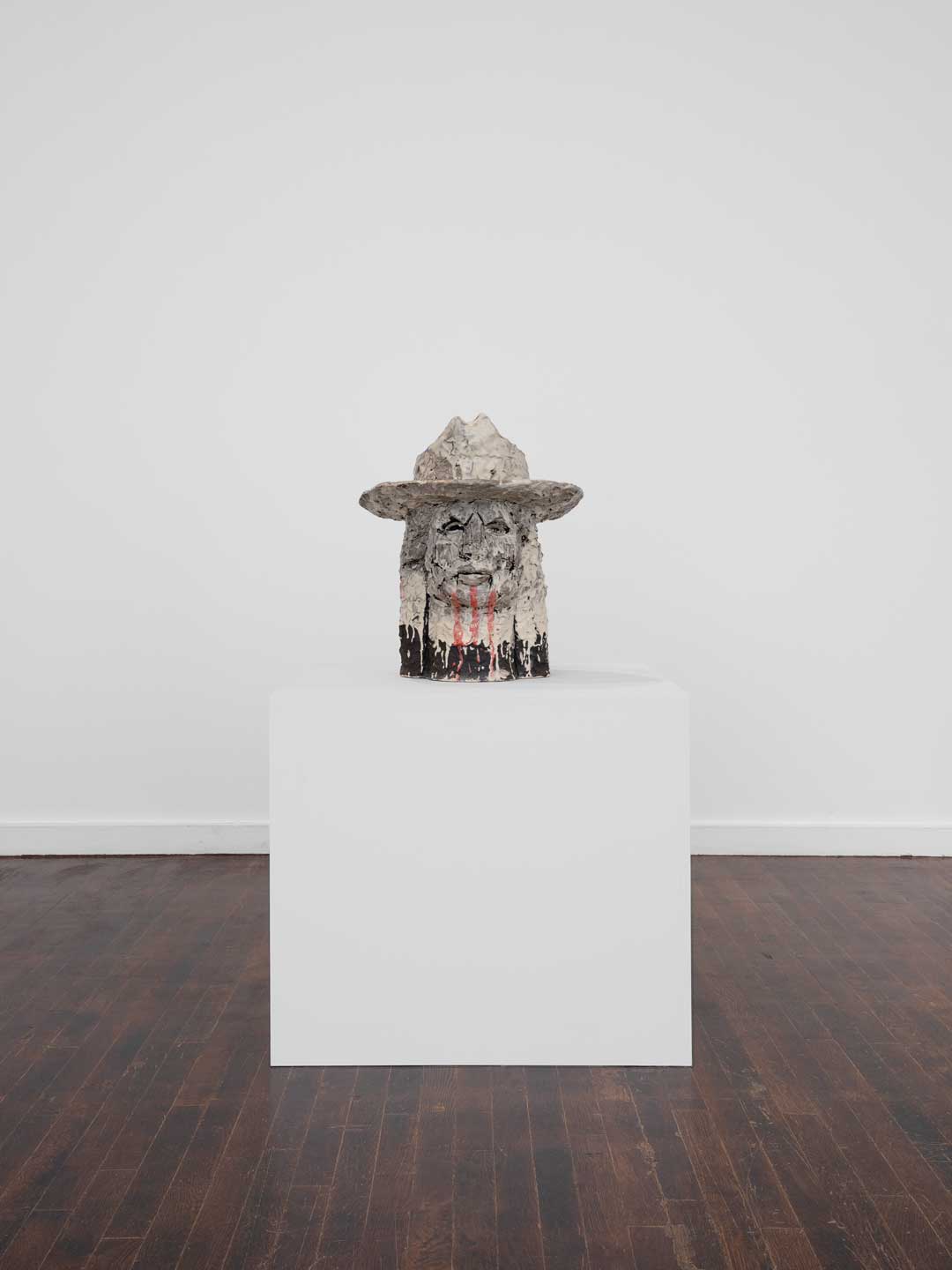
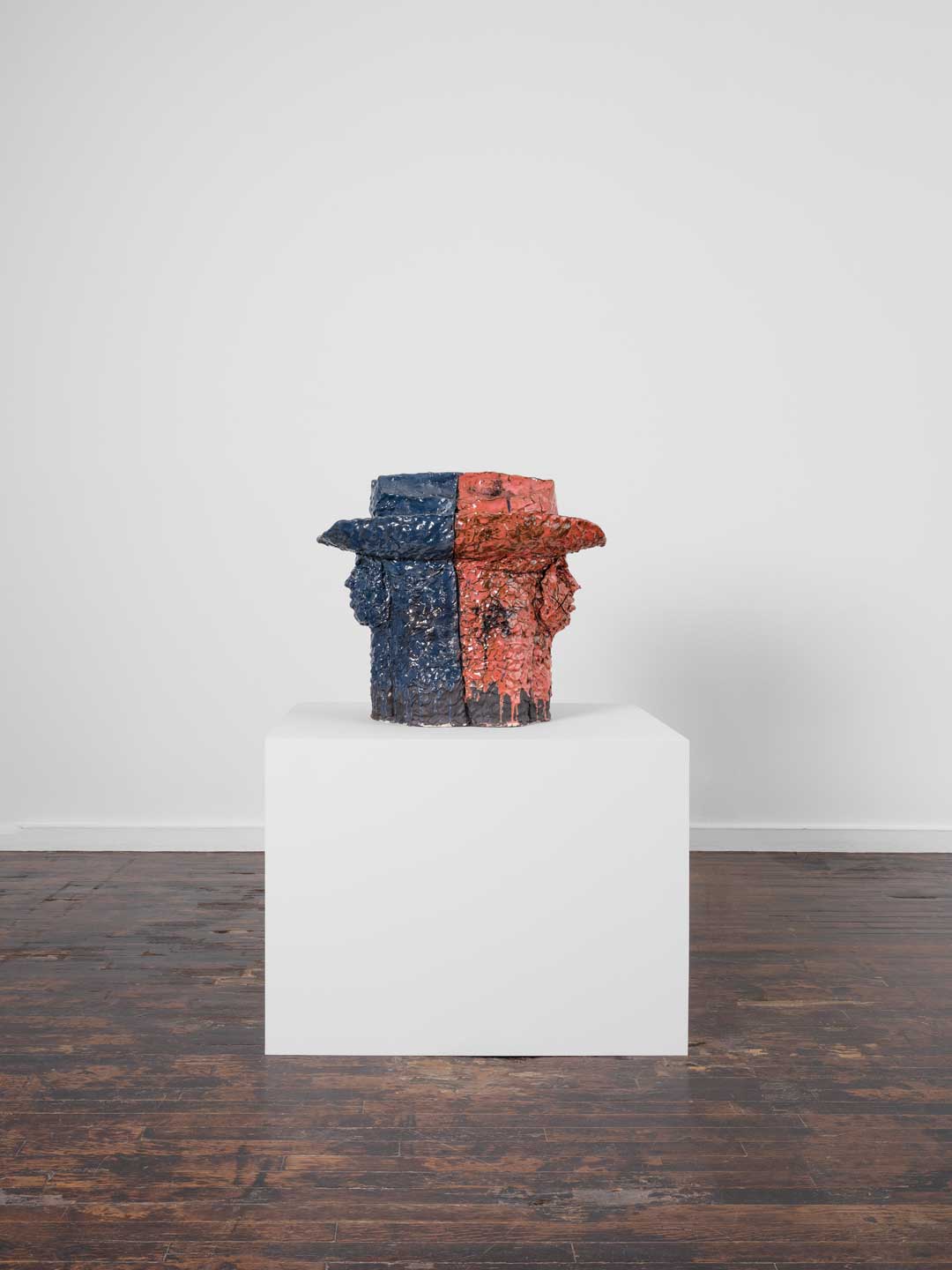
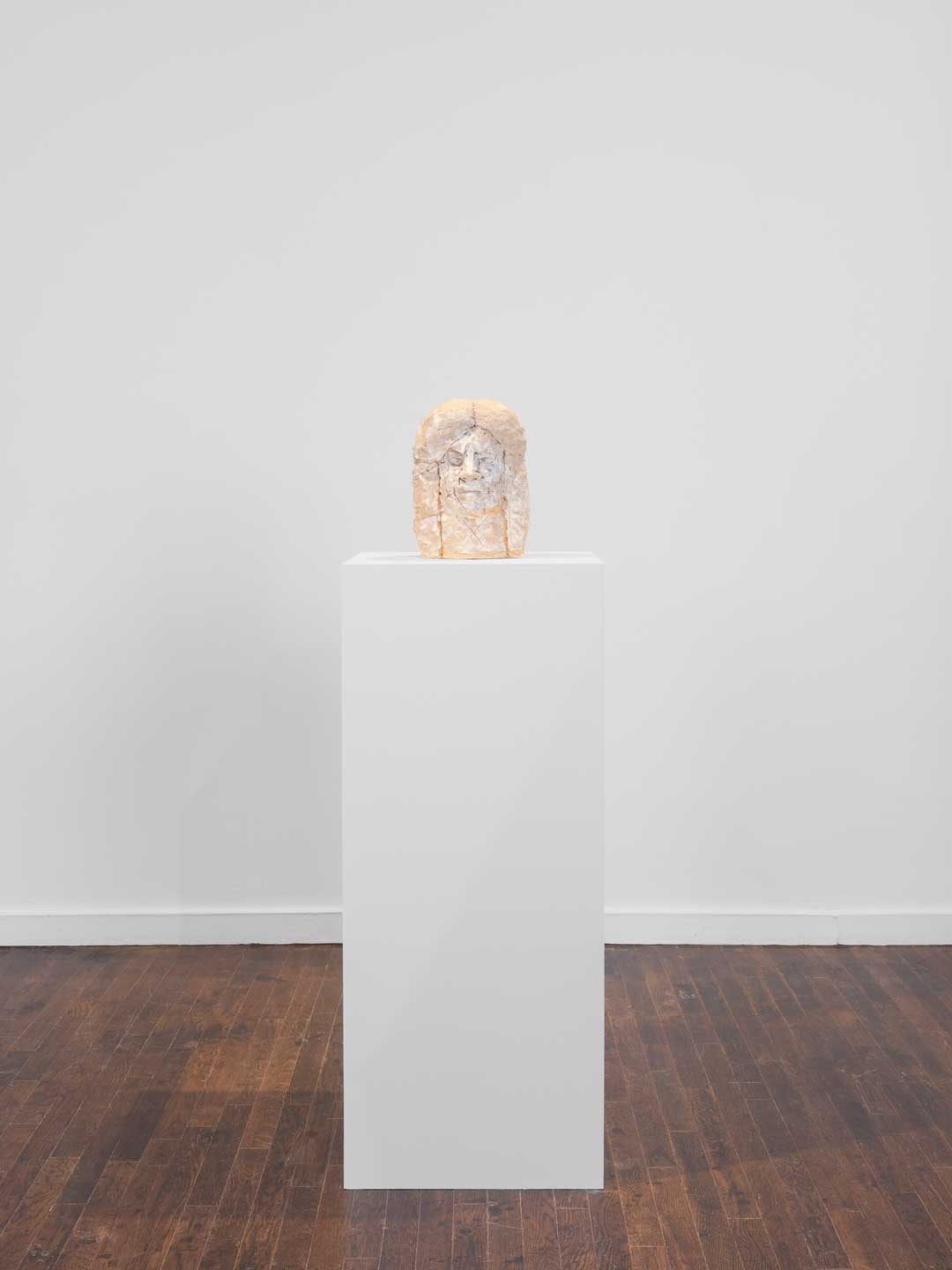
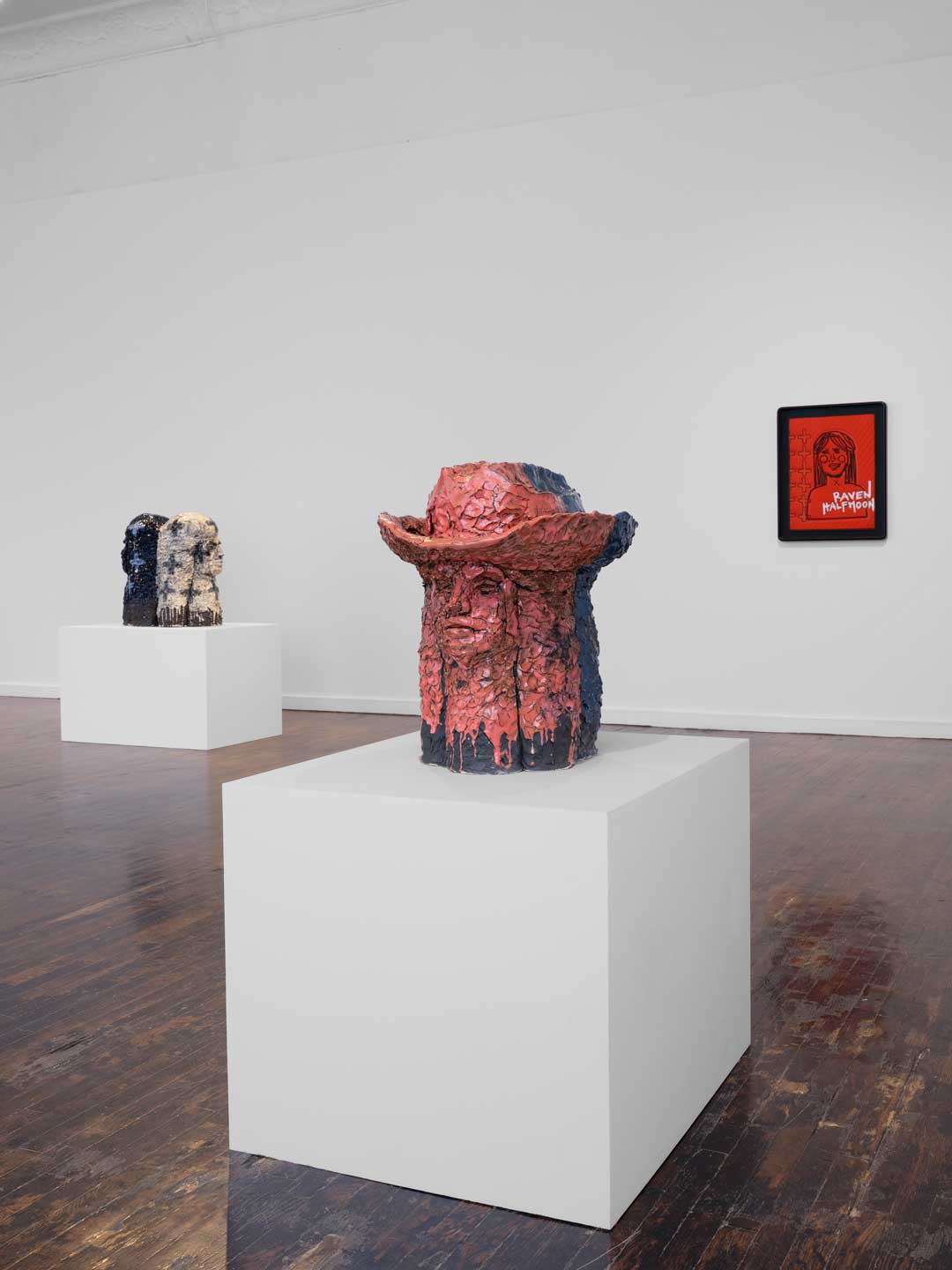
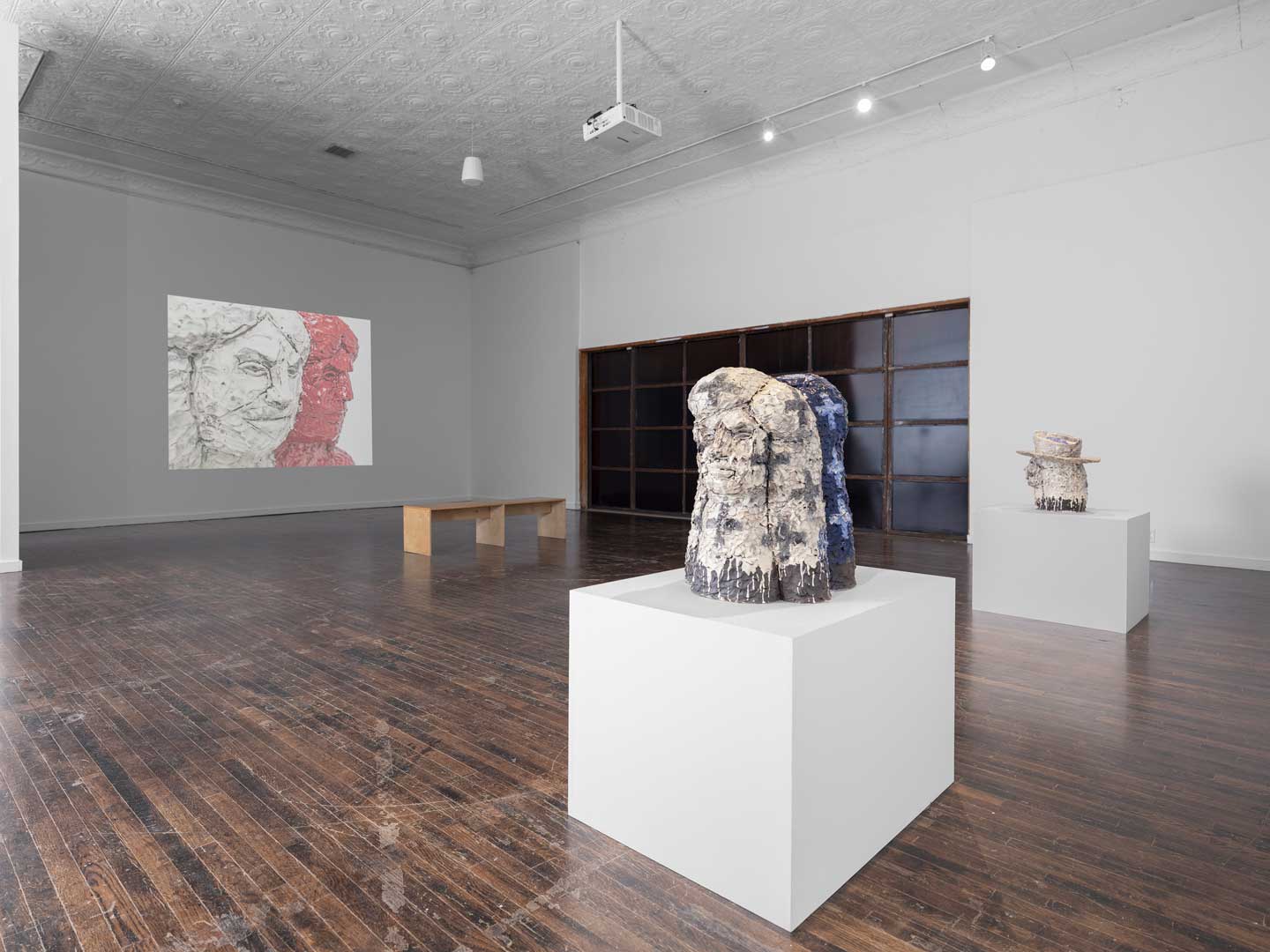
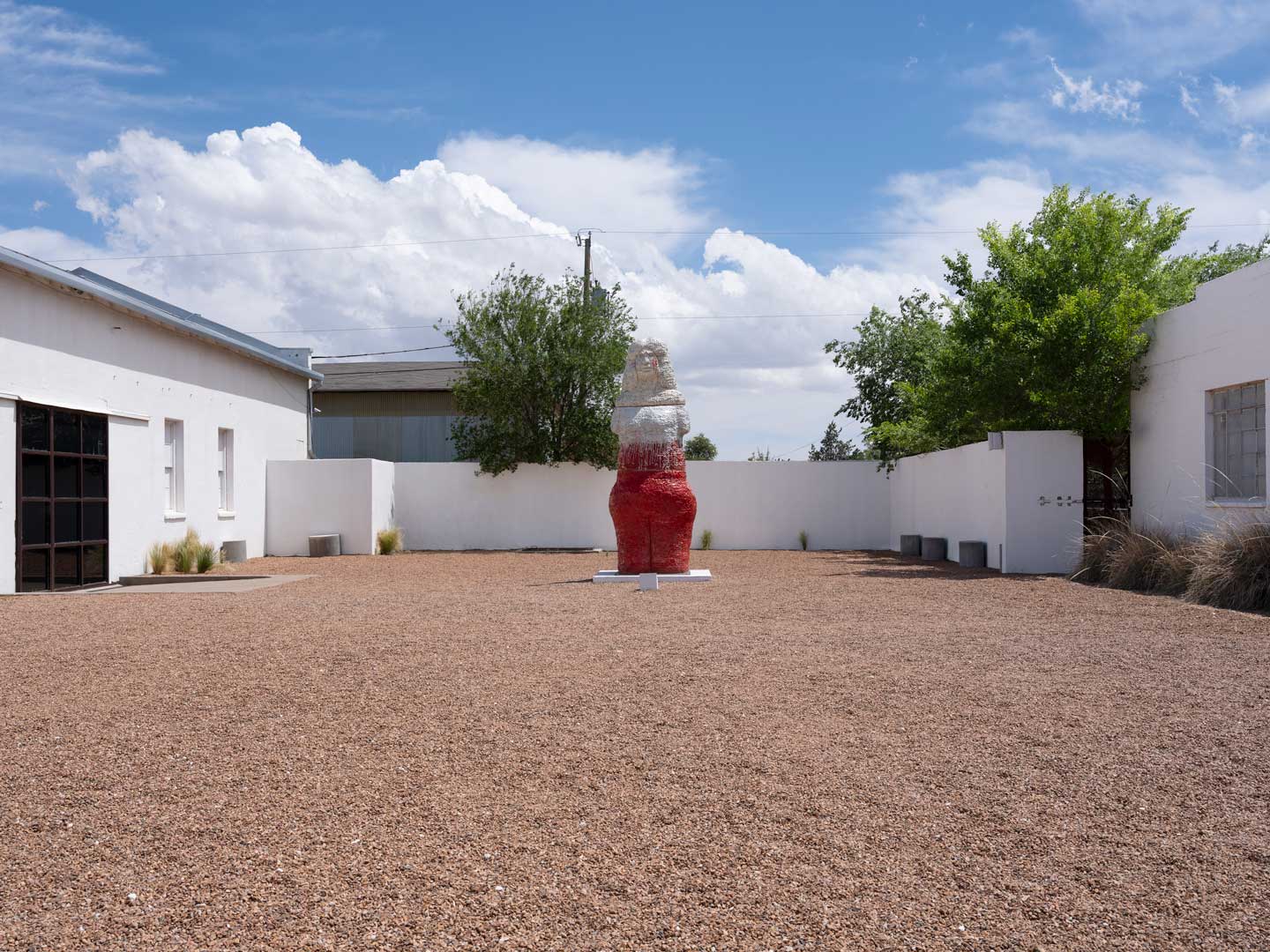
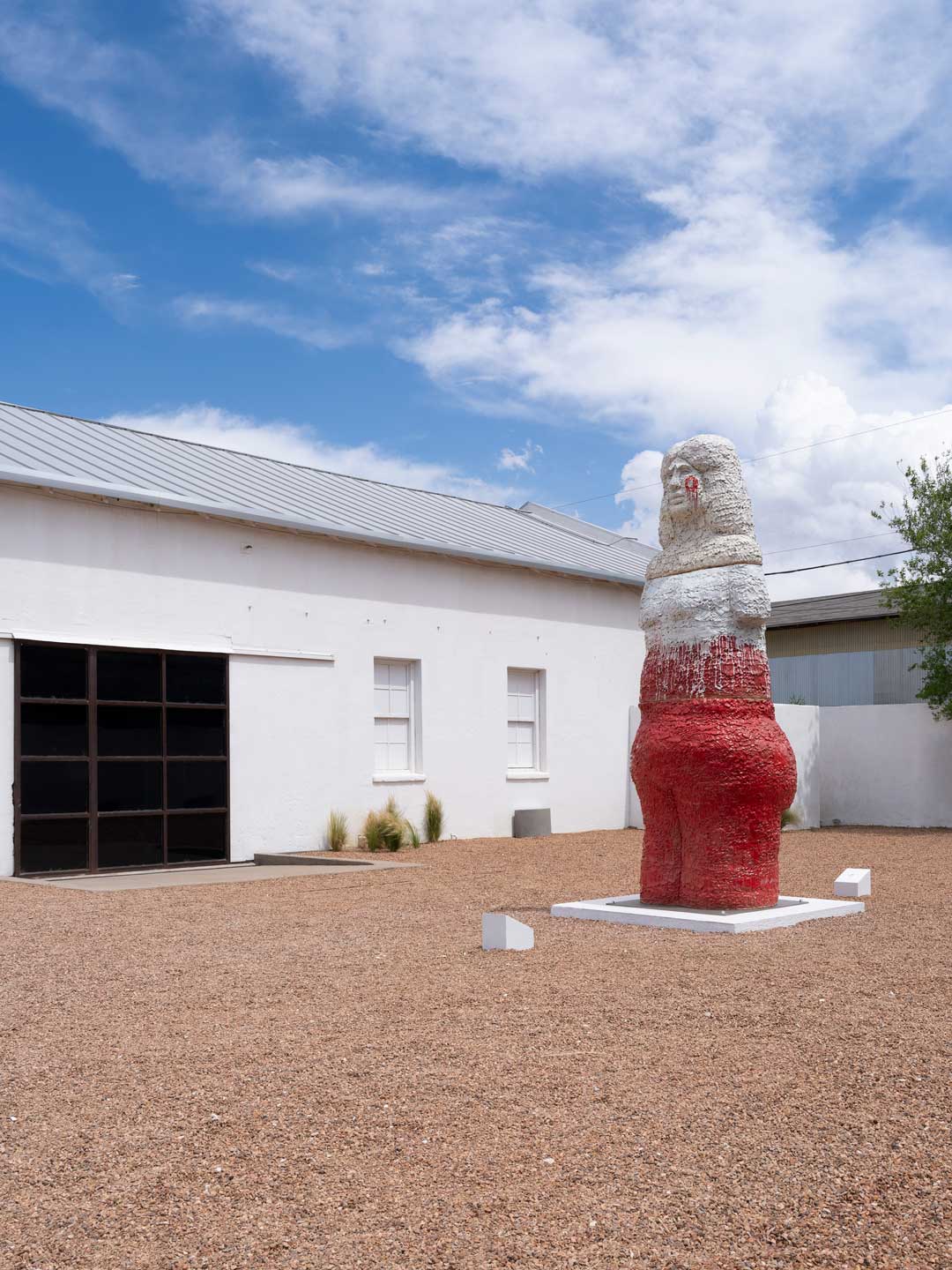
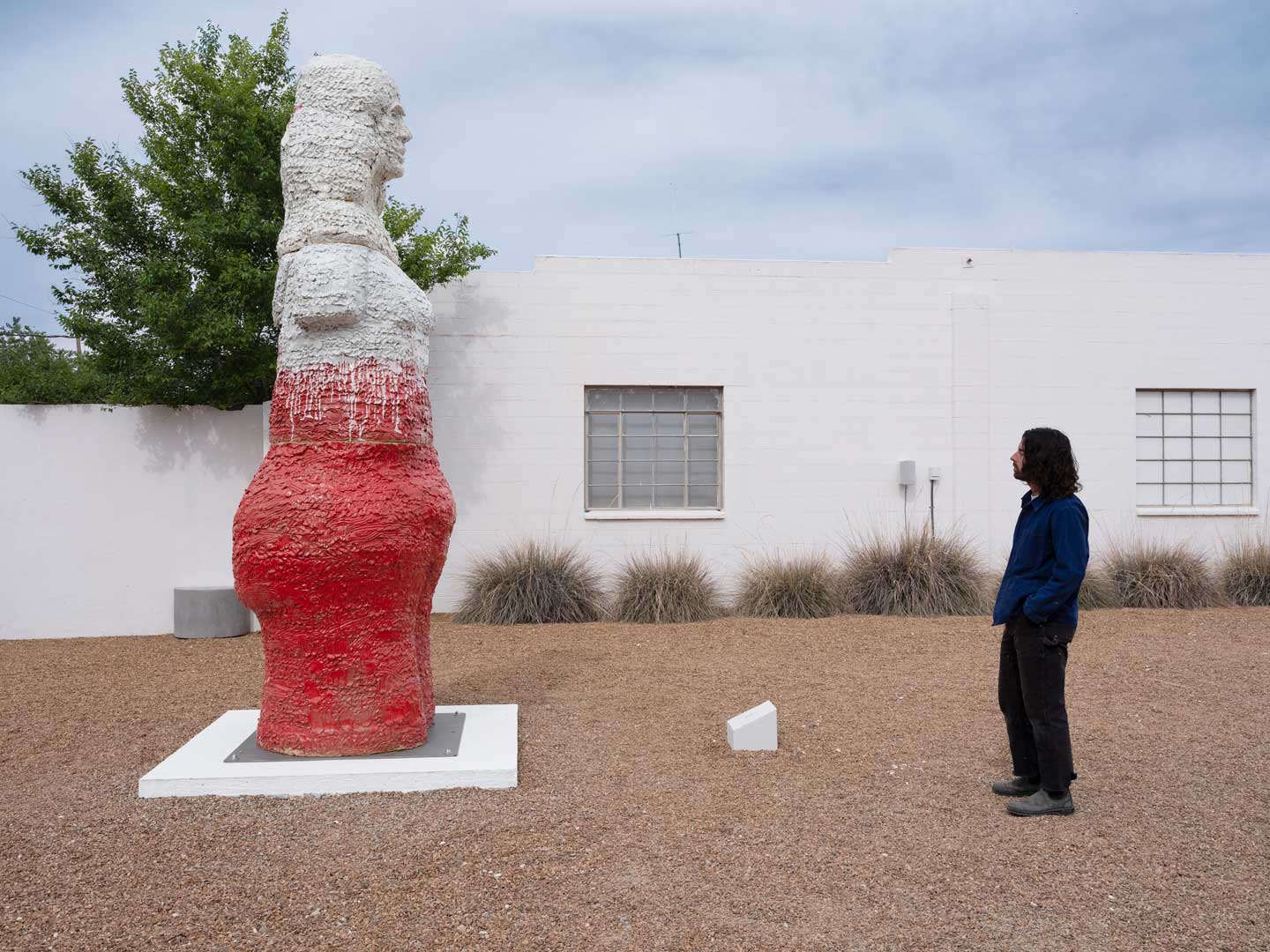
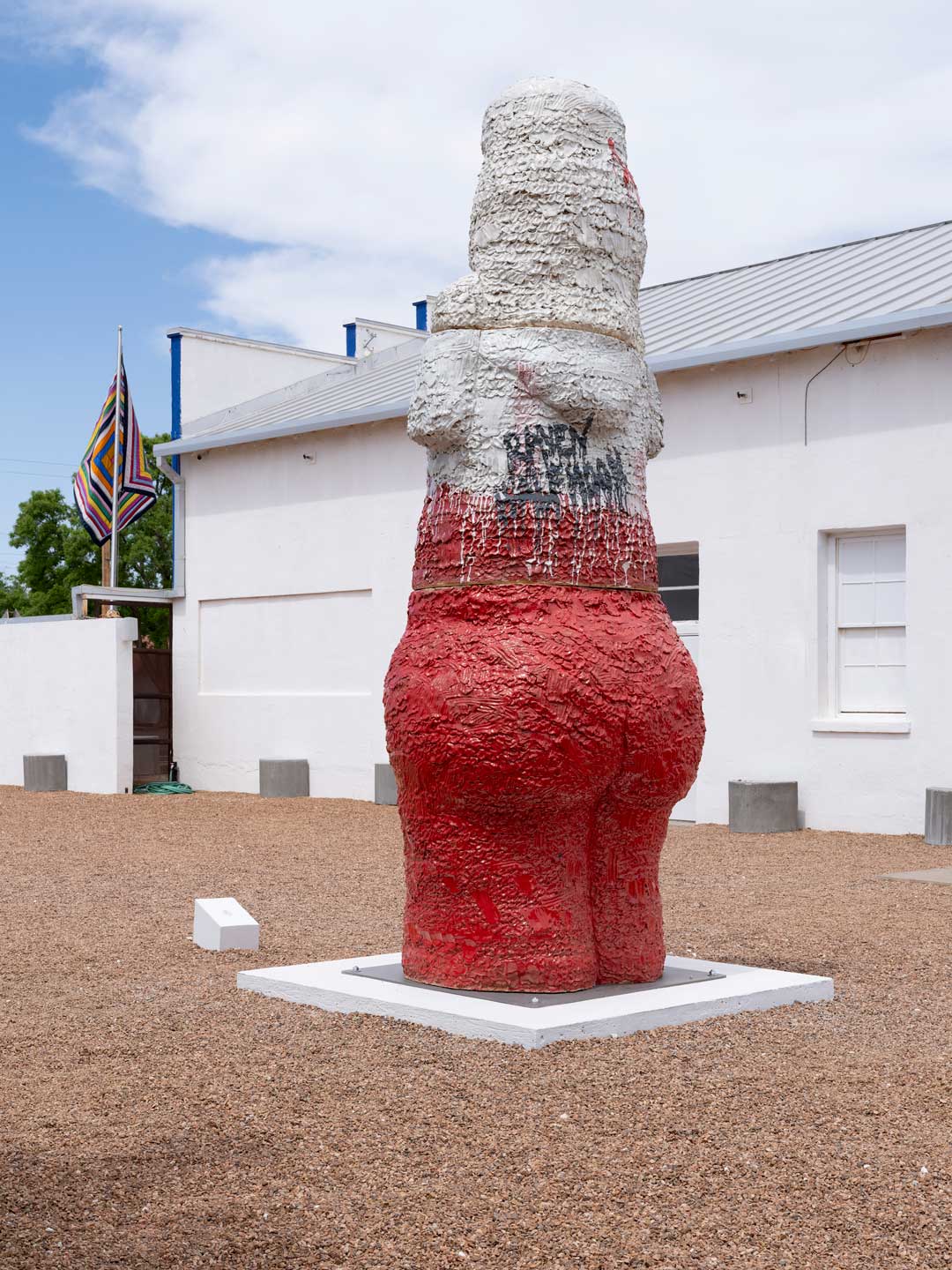
Halfmoon’s practice spans torso-scaled and colossal-sized glazed stoneware sculptures, with their enormous scale and visual power opposing existing stereotypes and biases to create new monuments that honor the artist’s Caddo Nation ancestors and their traditions, including her elders from whom she learned about ceramics as a teenager. Inspired by ancient Indigenous pottery, specifically Caddo pottery traditions, the colossal Olmec stone heads in Mexico, the Moai statues on Easter Island, and the major earth mounds her Caddo ancestors erected as temples, tombs, and residences for tribal leaders and priests, Halfmoon fuses Caddo pottery traditions (a history of making mostly done by women) with more contemporary gestures—often tagging her work (a reference also to Caddo tattooing and ancient pottery motifs). Her works reference stories of the Caddo Nation, specifically her feminist lineage and the power of its complexities.
Working mainly in portraiture and hand building each work using a coil method, Halfmoon’s surfaces are expressive and show deep finger impressions and dramatic dripping glazes—a physicality that presents her as both maker and matter. Her specific palette matches both the clay bodies she selects and the glazes she fires with—reds (after the Oklahoma soil and the blood of murdered Indigenous women), blacks (referencing the natural clay native to the Red River), and buff creams. Oftentimes she stacks and repeats imagery, creating totemic forms that represent herself and her maternal ancestry while also referencing the multiplicities that exist inside all of us.
Raven Halfmoon: Flags of Our Mothers is organized by The Aldrich Contemporary Art Museum and Bemis Center for Contemporary Arts. The exhibition is curated by Amy Smith-Stewart, Diana Bowes Chief Curator at The Aldrich Contemporary Art Museum and Rachel Adams, Chief Curator and Director of Programming at Bemis Center for Contemporary Arts. Generous support for this project provided by Art Bridges.

Images
Opening Celebrations
FRIDAY, MAY 1
5–8 PM
Opening Reception at Ballroom Marfa
108 E San Antonio St
SATURDAY, MAY 2
11 AM-12:30 PM
Artist Talk at Ballroom Marfa
Featuring Raven Halfmoon, Tony Marsh, Amy Smith-Stewart, and Rachel Adams
108 E San Antonio St
1–3 PM
Community Meal at Capri Marfa
Food by Cherokee Chef Nico Albert of Burning Cedar Sovereign
603 W San Antonio St
7 PM–Late
Night Beats live at Capri Marfa
Music begins at 8 PM
603 W San Antonio St
Artist Profile
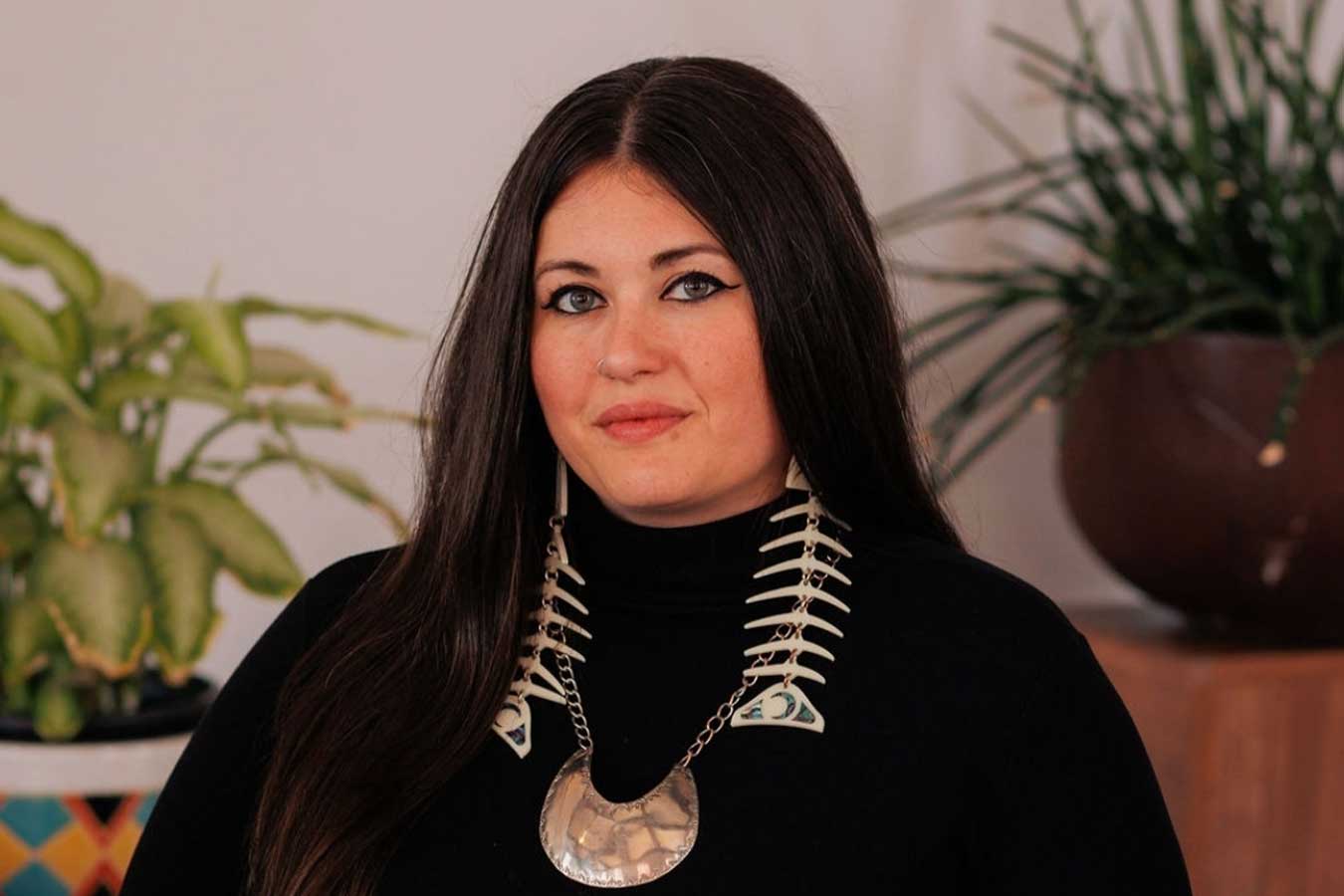
Raven Halfmoon was born in 1991 in Norman, Oklahoma, where she presently lives and works. She is a member of the Caddo Nation, a federally recognized Tribal Nation headquartered in Binger, Oklahoma with a rich history of many thousands of years in the Southeastern region of the United States. Halfmoon received her BFA from the University of Arkansas, where she double majored in ceramics and cultural anthropology.
About Art Bridges Foundation
Art Bridges Foundation is the vision of philanthropist and arts patron Alice Walton. Founded in 2017, Art Bridges creates and supports projects that share works of American art with communities across the United States and its territories. Art Bridges partners with a growing network of over 300 museums—impacting 25 million people nationwide—to provide financial and strategic support for exhibitions, collection loans, and programs designed to educate, inspire, and deepen engagement with local communities. The Art Bridges Collection represents an expanding vision of American art from the 19th century to present day and encompasses multiple media and voices. For more information, visit artbridgesfoundation.org.
Special Thanks
Ballroom Marfa extends special thanks to Art Bridges for supporting this project. Additional thanks to Marfa Public Radio, The City of Marfa, Paul Graybeal, Stacey Halfmoon, Amy Smith‑Stewart, Rachel Adams, Tony Marsh, Jamey Garza, Constance Holt, Jacob Mires, Hunter Brown, Andrei Renteria, Anthony Rundblade, Joey Benton, Francisco Rosas, as well as the artists and other collaborators who made this exhibition possible.
Ballroom Marfa is generously supported by The Brown Foundation Inc., and Lebermann Family Foundation.